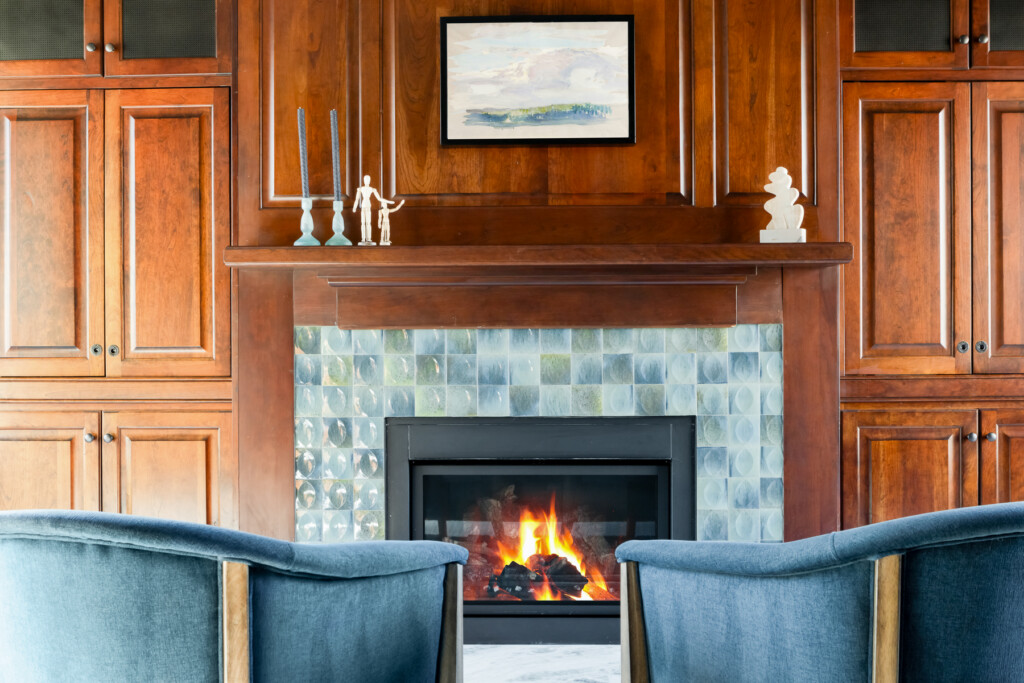
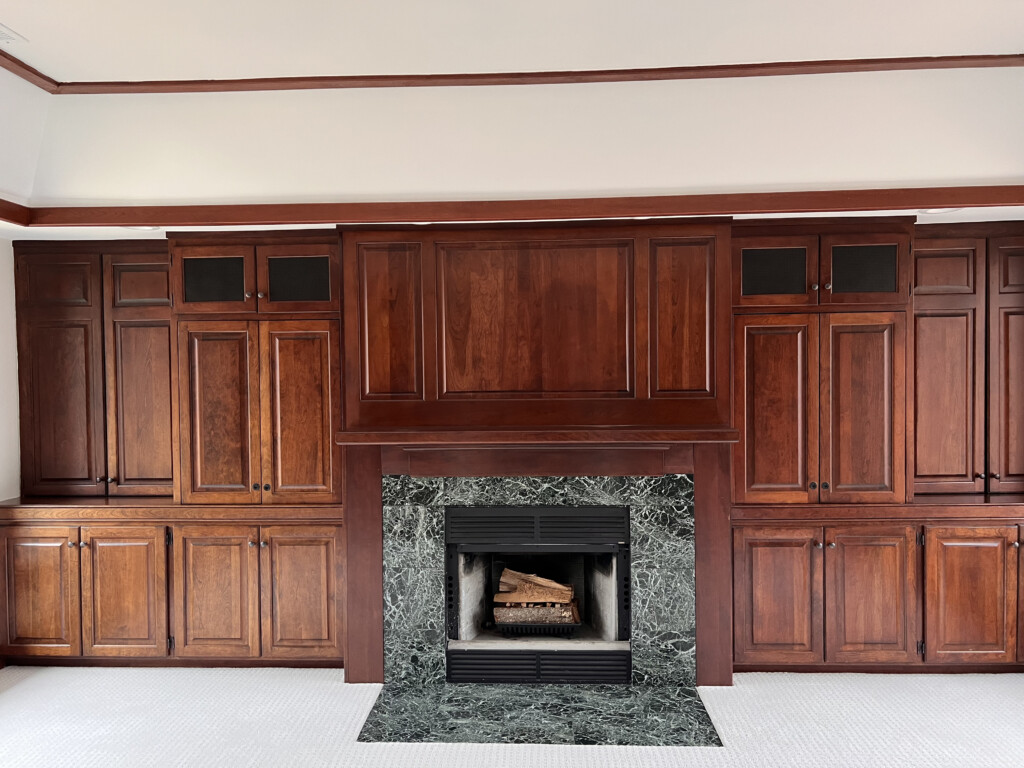
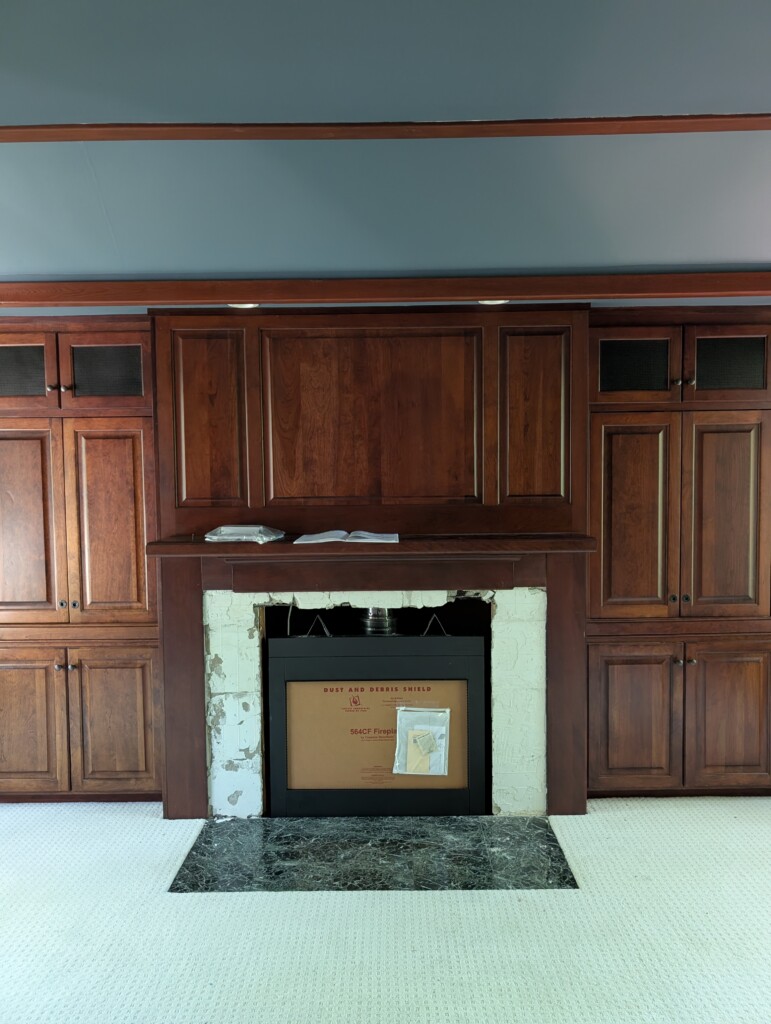
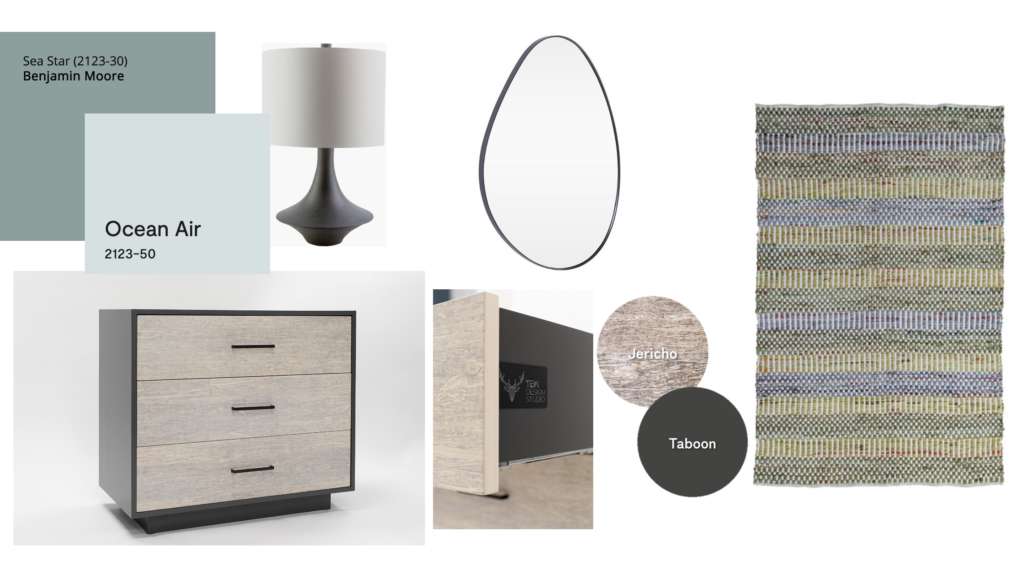
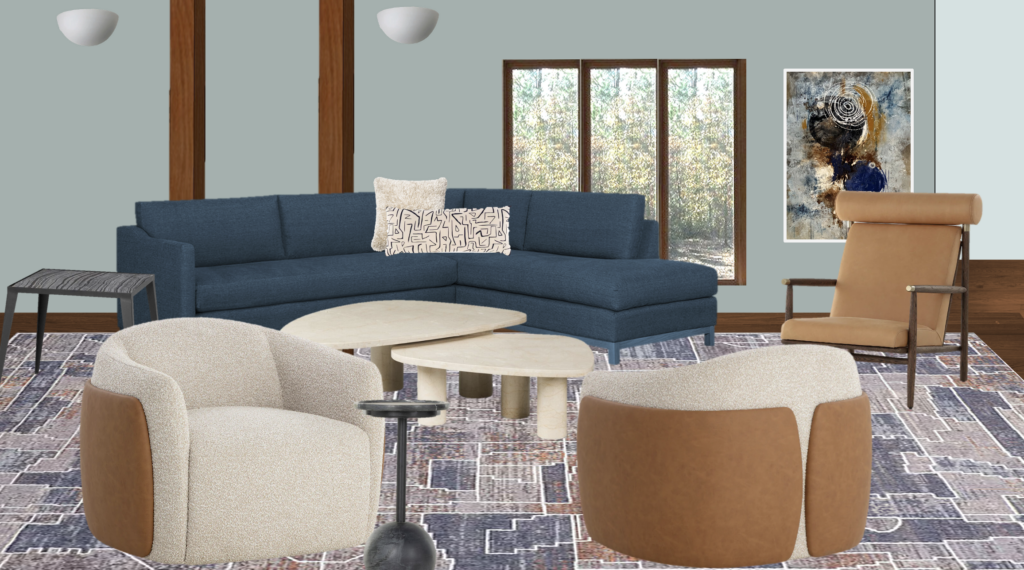
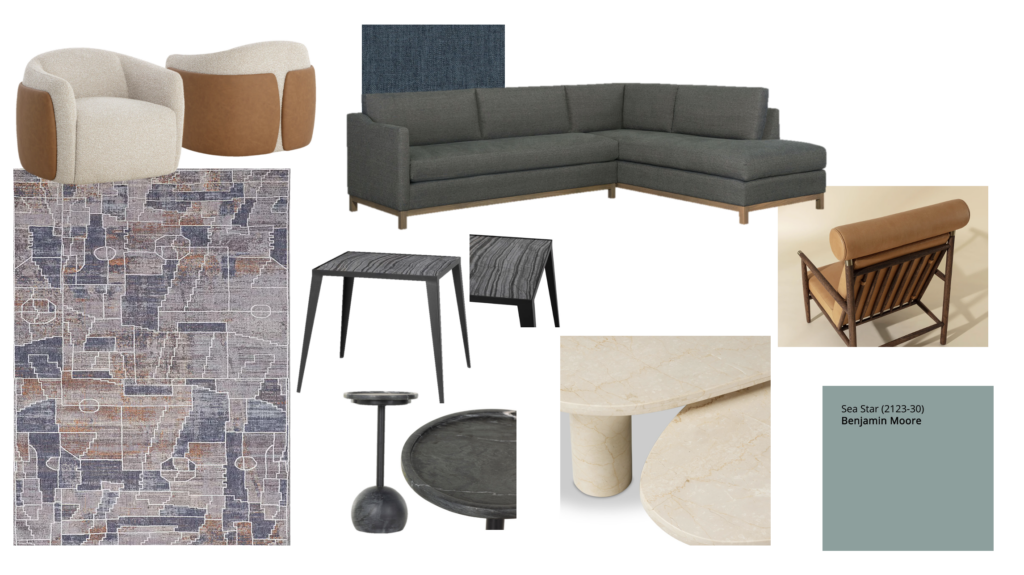
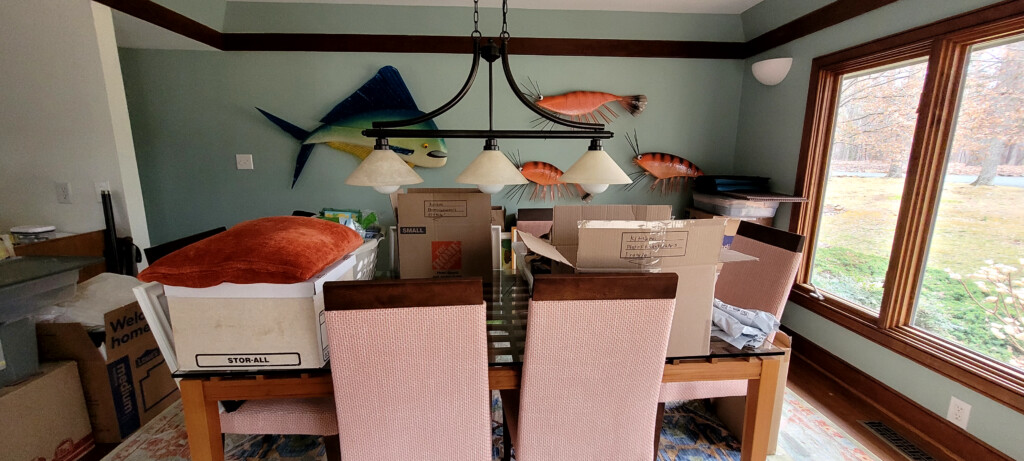
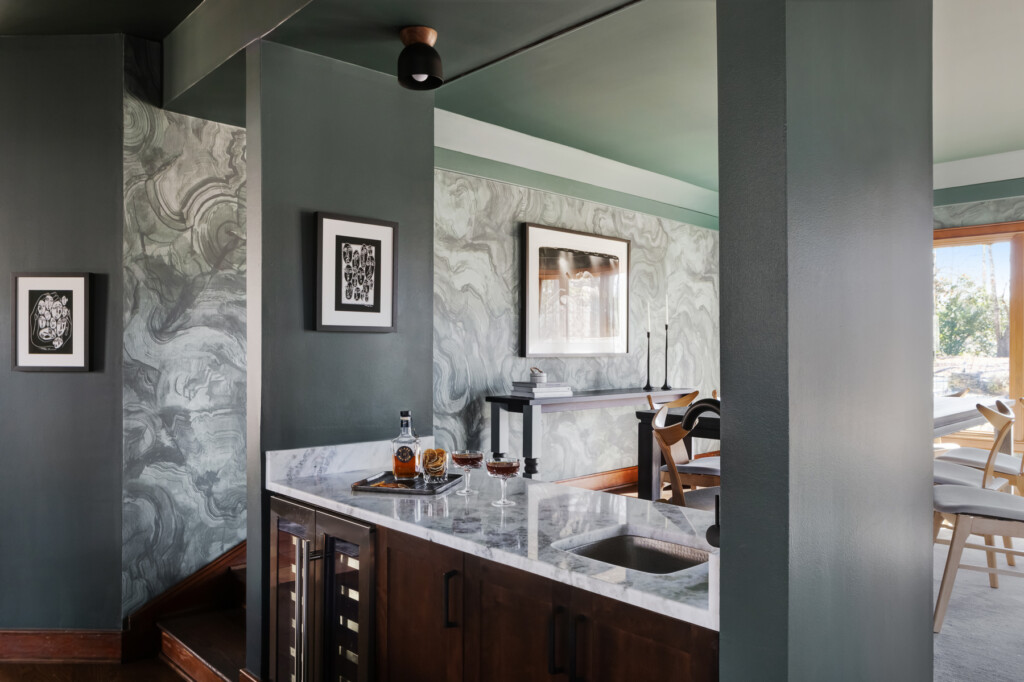
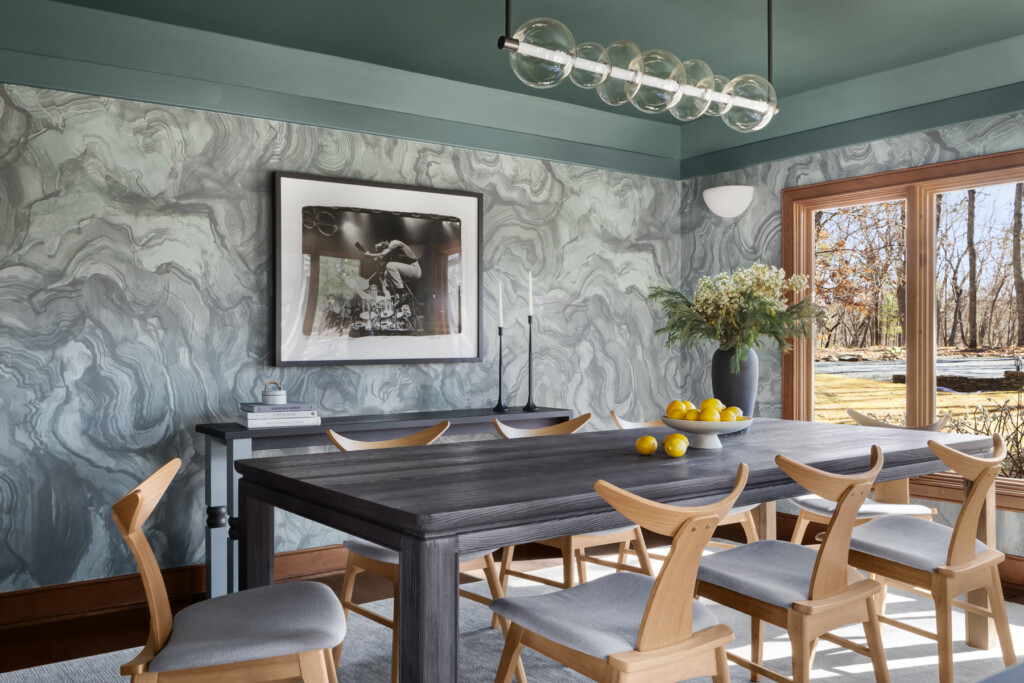
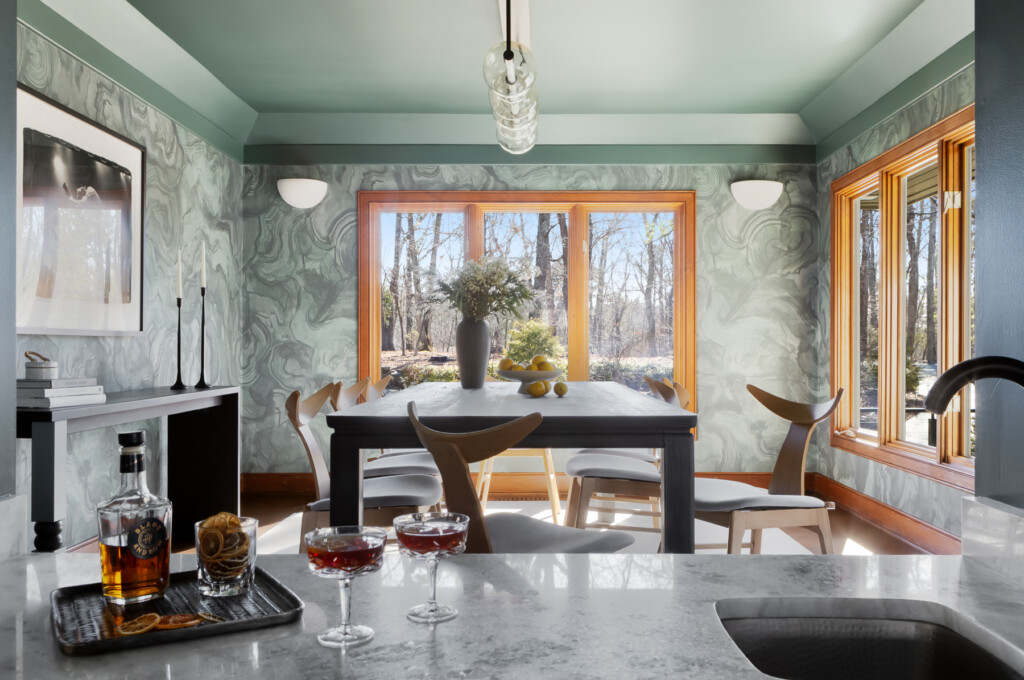
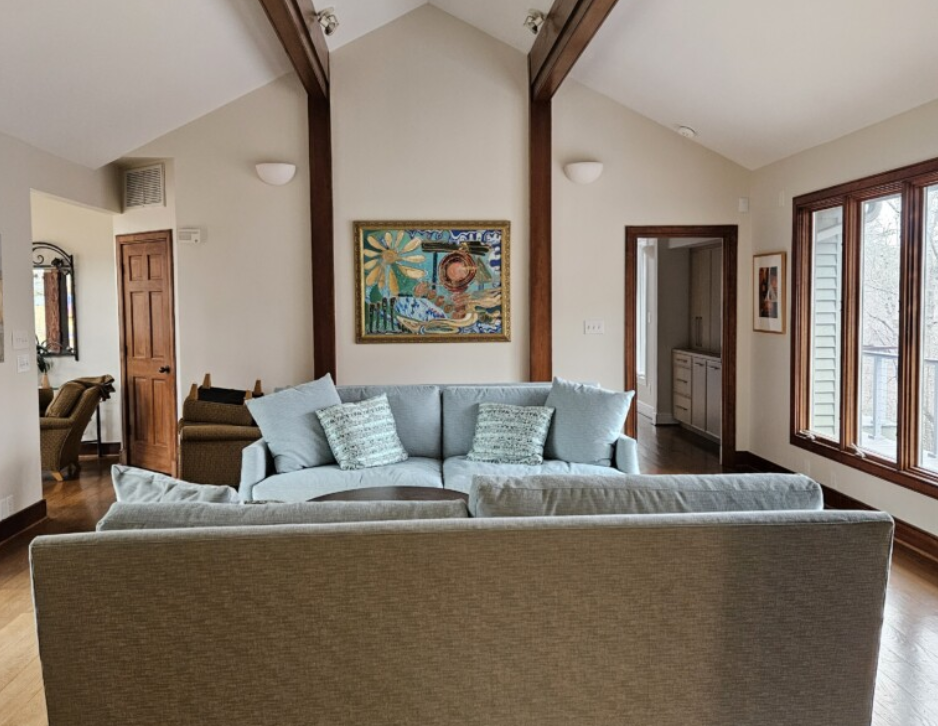
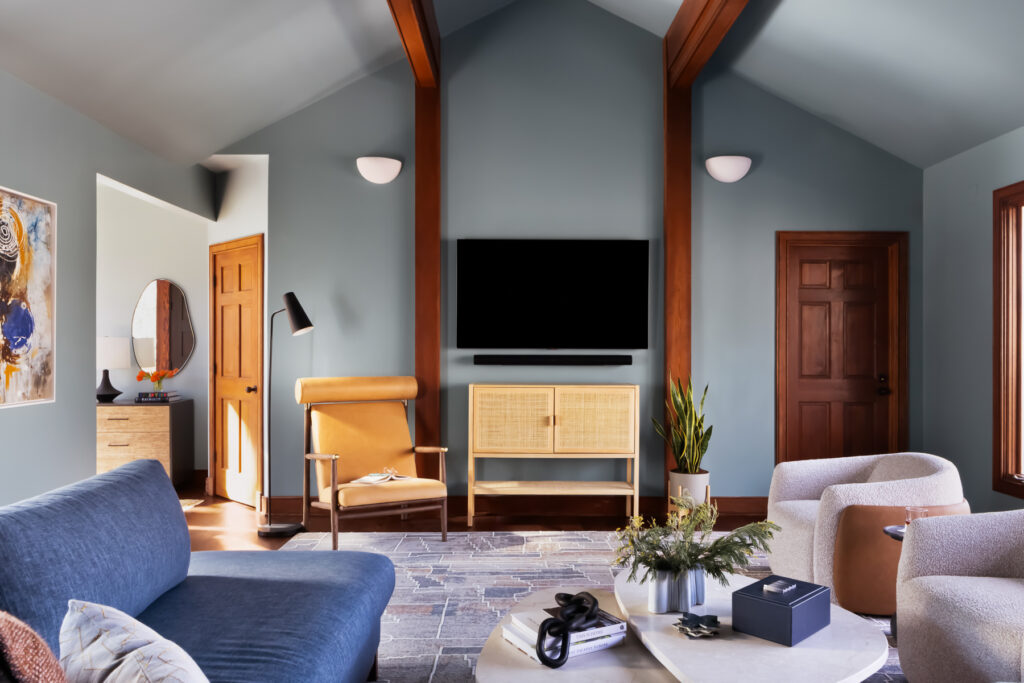
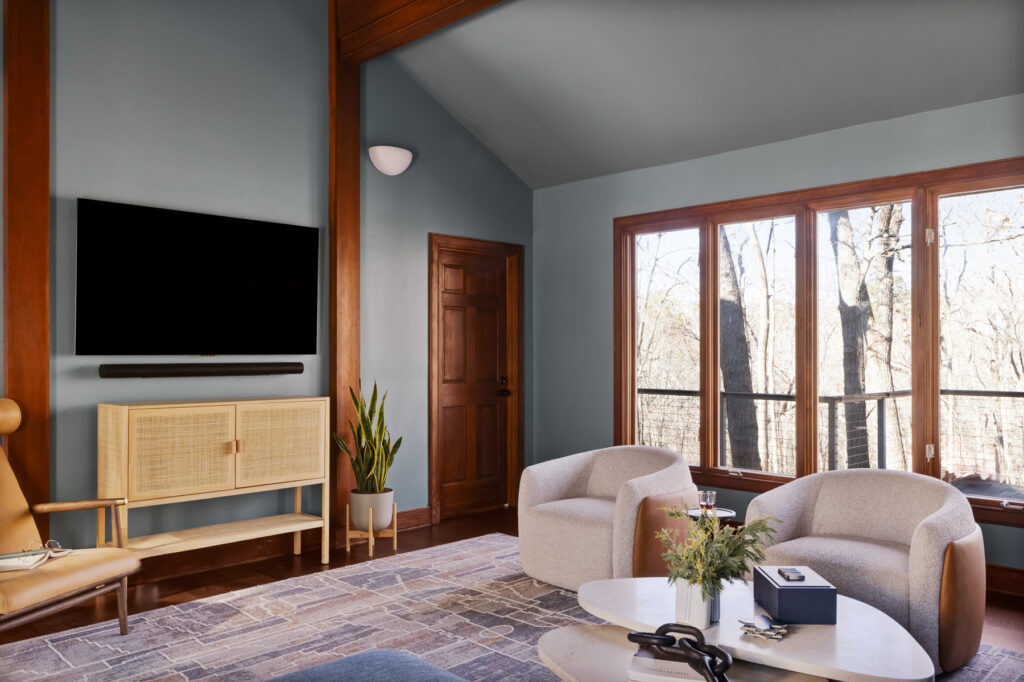
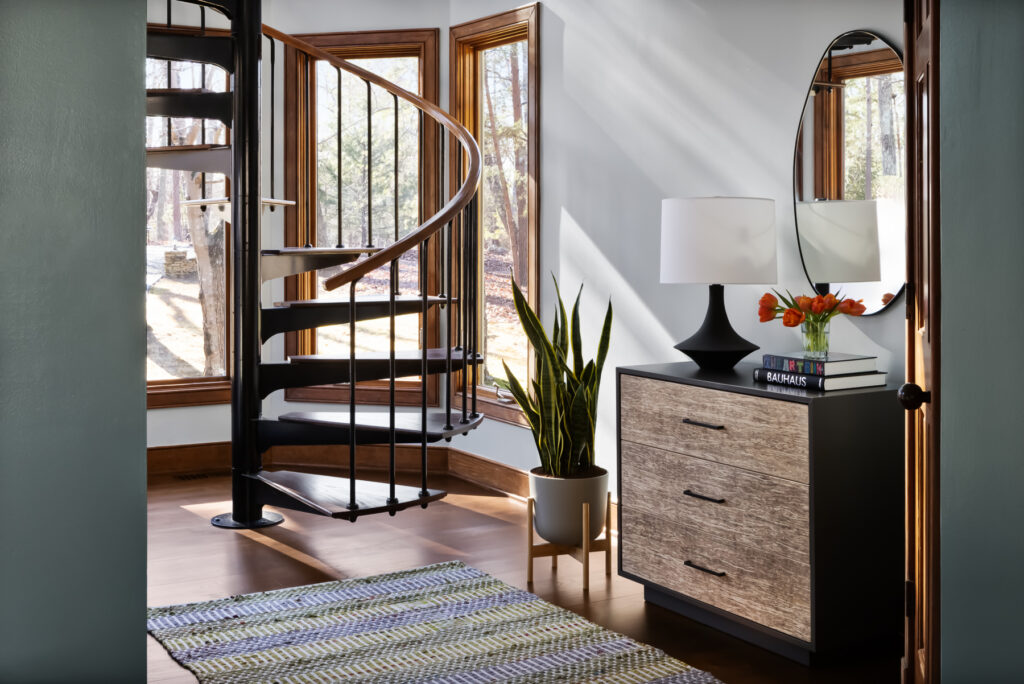
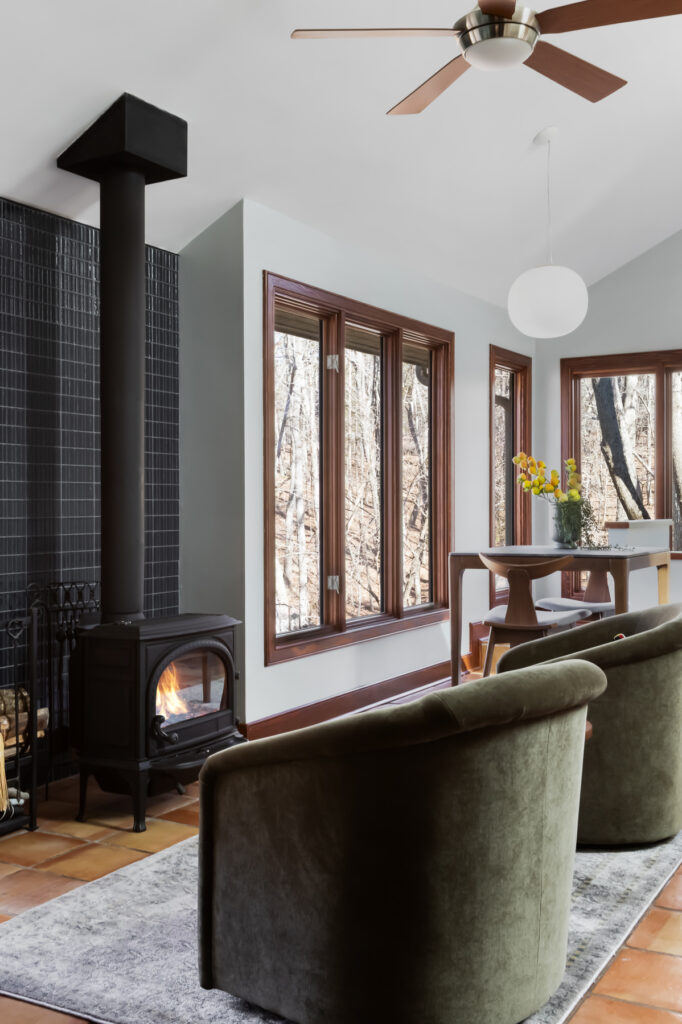
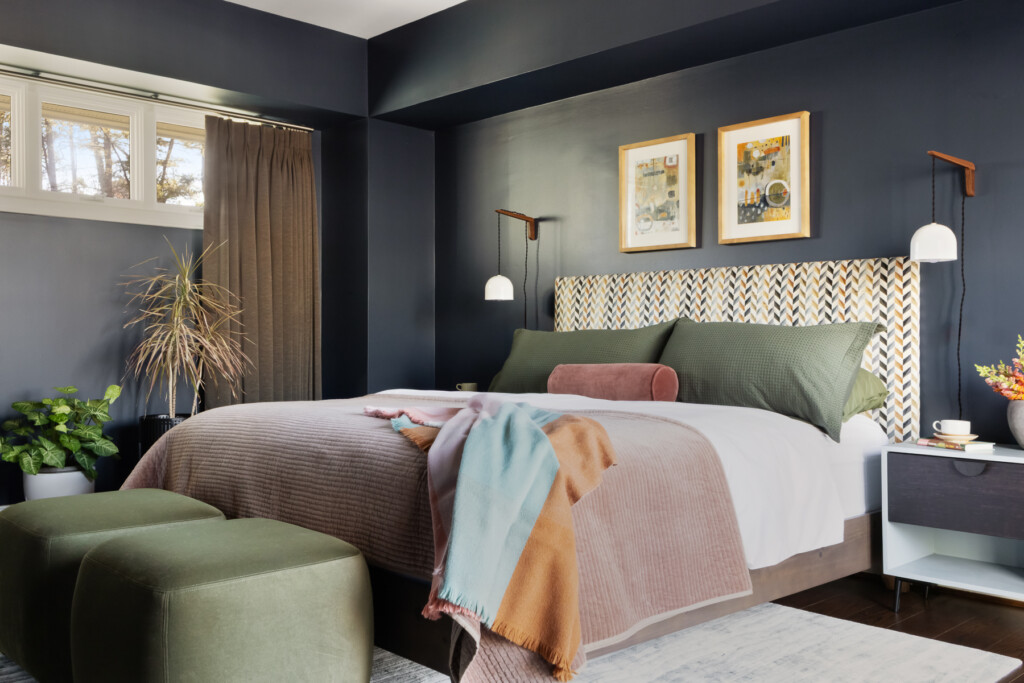
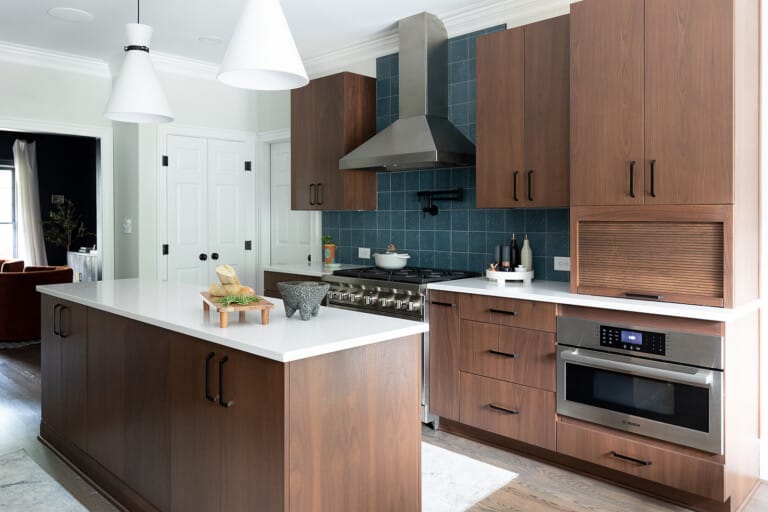
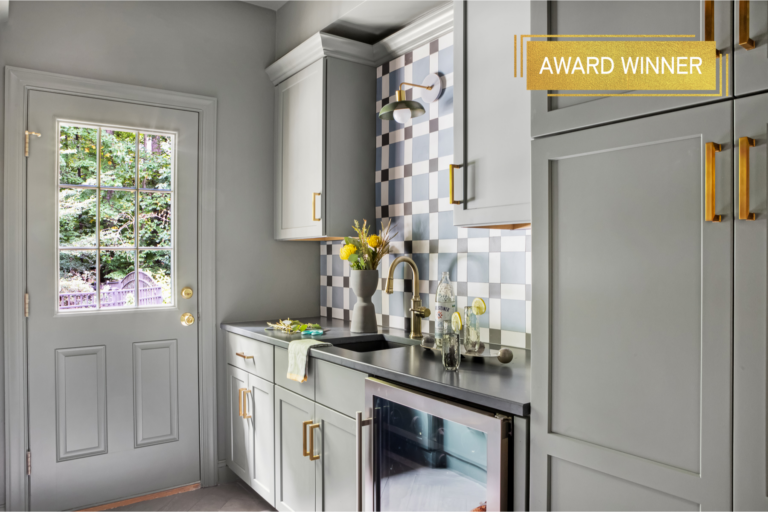
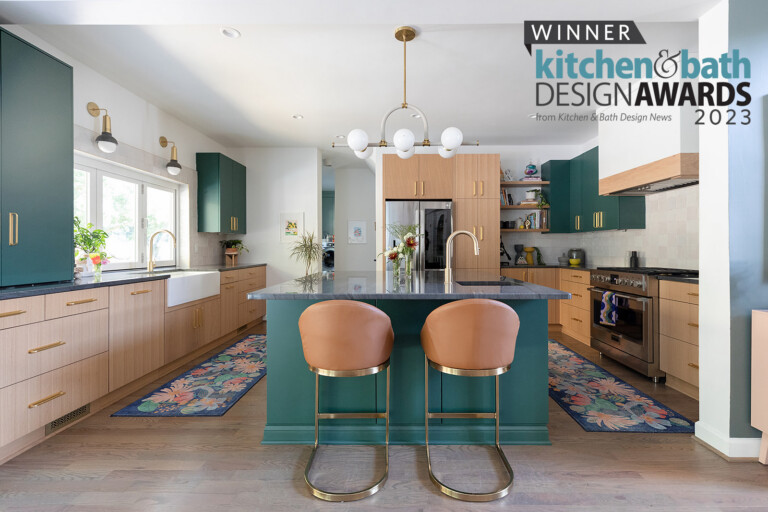
When our clients decided to relocate from California to North Carolina, they found their forever home before they’d ever set foot in the state. It was a beautiful mid-century modern style home in the Raleigh Triangle area with great bones, ready for some light updates and a lot of personalization. The catch was that they were still living three thousand miles away, planning a home for a life they hadn’t quite started yet. That kind of distance could have made the whole process harder. Instead, it became the perfect chance to put our full-service virtual design process to the test, and to prove that great design doesn’t require being in the same room.
If you’re planning a move and wondering how design can possibly happen before you’ve packed a single box, you’re not alone. It’s one of the questions we hear most, so we’re answering it here.
How does virtual interior design actually work?
Virtual interior design means the client doesn’t need to be physically present for any phase of the project, from discovery through installation, as long as there’s trust in the process. The designer still needs to be in the room to understand how a space actually flows, how light moves through it, how a family will use it day to day. What changes is that the client doesn’t have to be standing there too.
Good design was never really about the client being in the room for every decision. It’s about understanding how someone wants to live and translating that into a space, wherever the conversation happens to take place. Our clients were entering retirement and moving to be closer to family, and we knew that meant a real lifestyle shift was coming. We designed for that shift from our very first call, long before they’d ever walked through the front door.
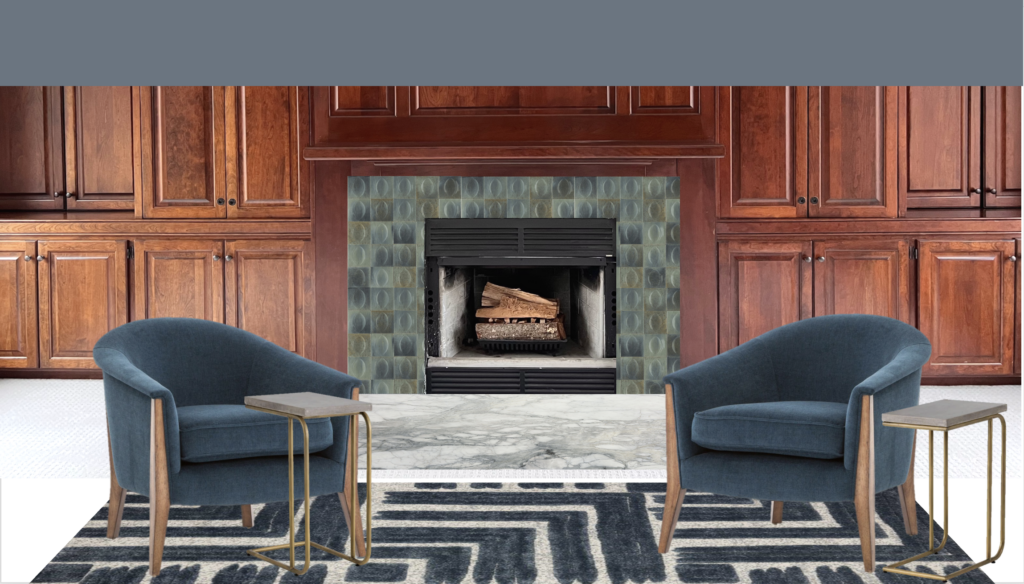
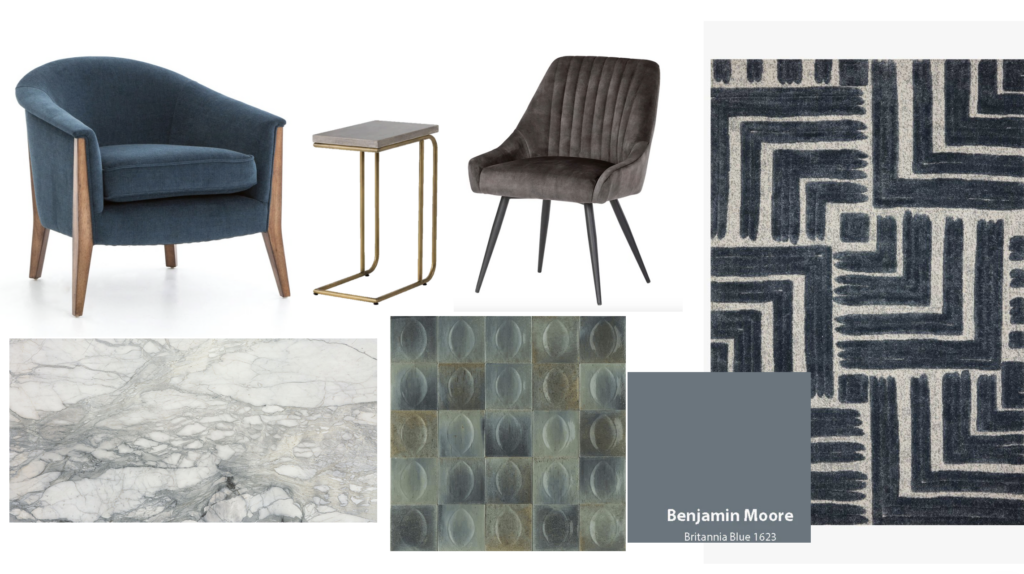
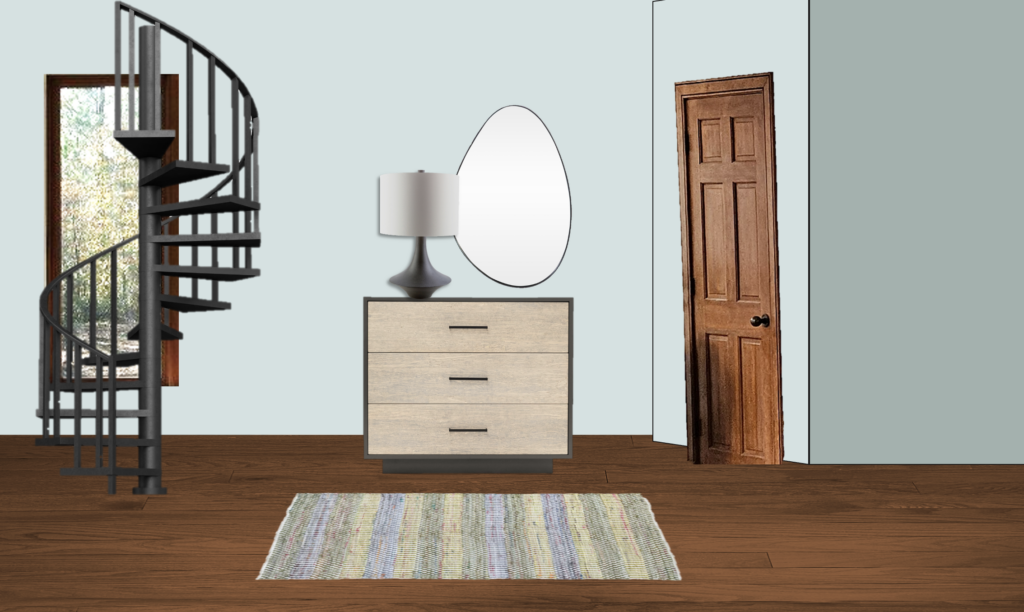
With the right tools, that understanding travels just as well over a screen as it does in person. Renderings, mood boards, and video walkthroughs let clients see a room before it exists, and weigh in just as confidently from a laptop in another state as they would standing in the space itself.
What did you actually do onsite if the clients weren’t there?
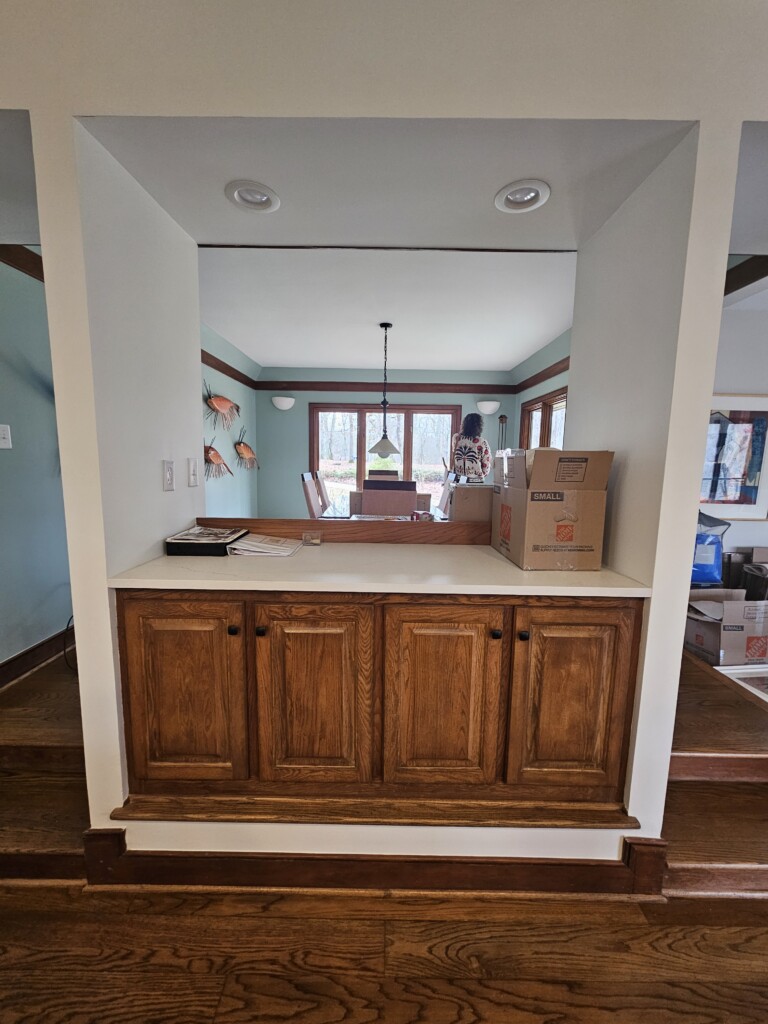
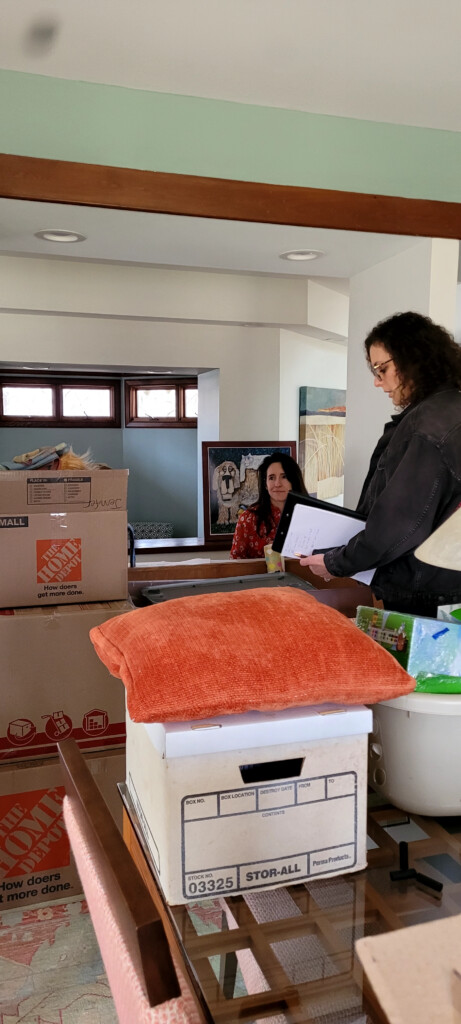
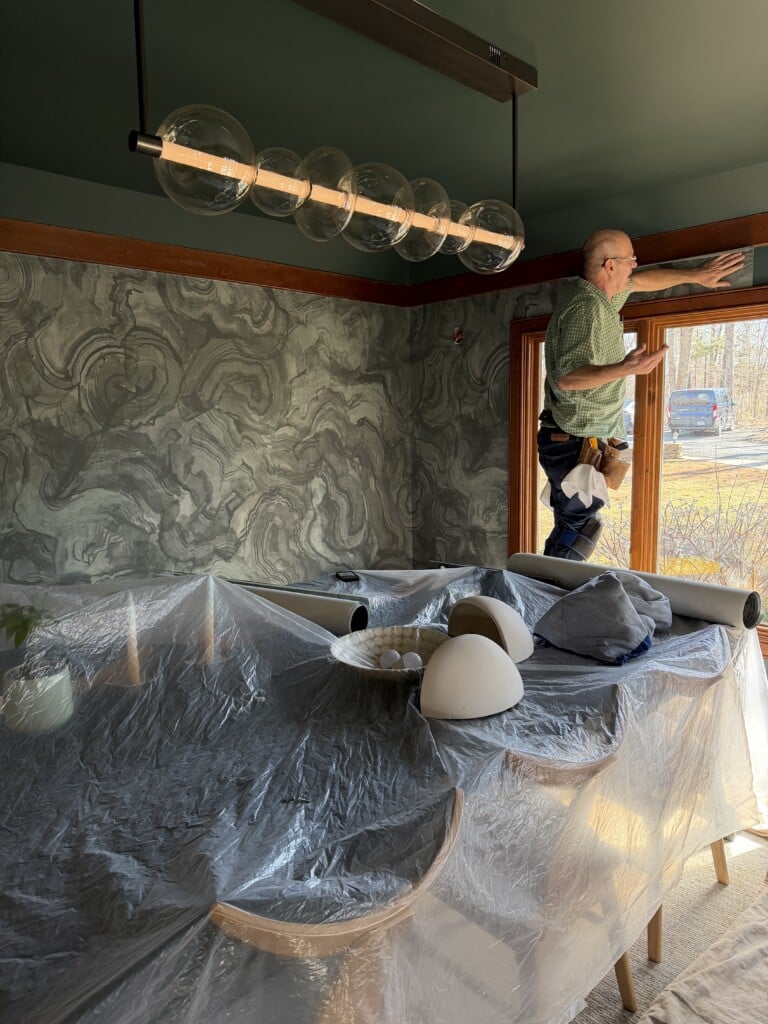
We became their eyes and ears on the ground. That meant FaceTime and Zoom calls from inside the house, photos sent as work progressed, and site visits with the general contractor and trades whenever a decision truly needed a person standing there to make it. Weekly email updates kept them in the loop, fabric and wood samples went out in the mail as furnishing decisions came together, and they flew in a few times along the way to see things in person and weigh in on the bigger calls.
What does the virtual process look like, step by step?
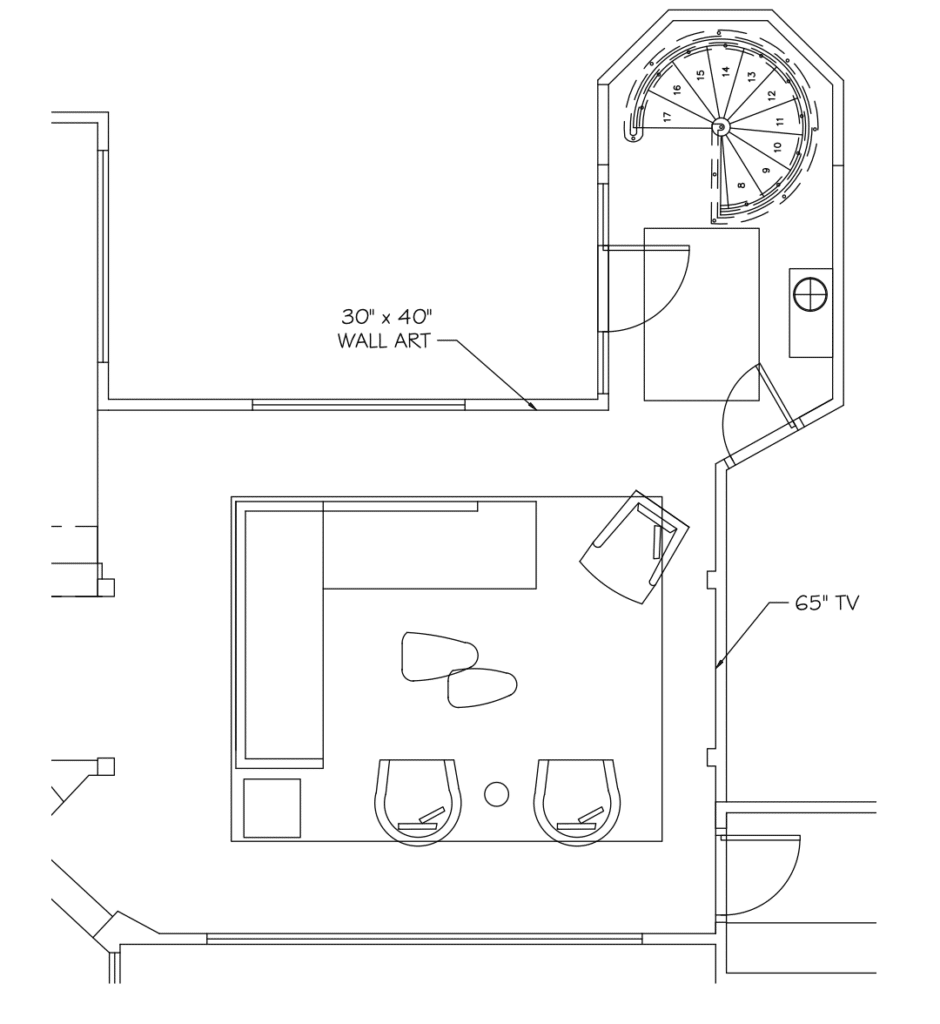
It starts with a virtual design strategy session, where we get to know a client’s style, priorities, and how they want each room to feel. From there we space plan every room to find the best layout for furnishings, flow, and function, then build out renderings and mood boards so the design is something clients can actually see, not just imagine. Tile, flooring, appliances, faucets, furnishings, and accessories all get selected and shared digitally, so clients can approve, tweak, or send us back to the drawing board in real time.
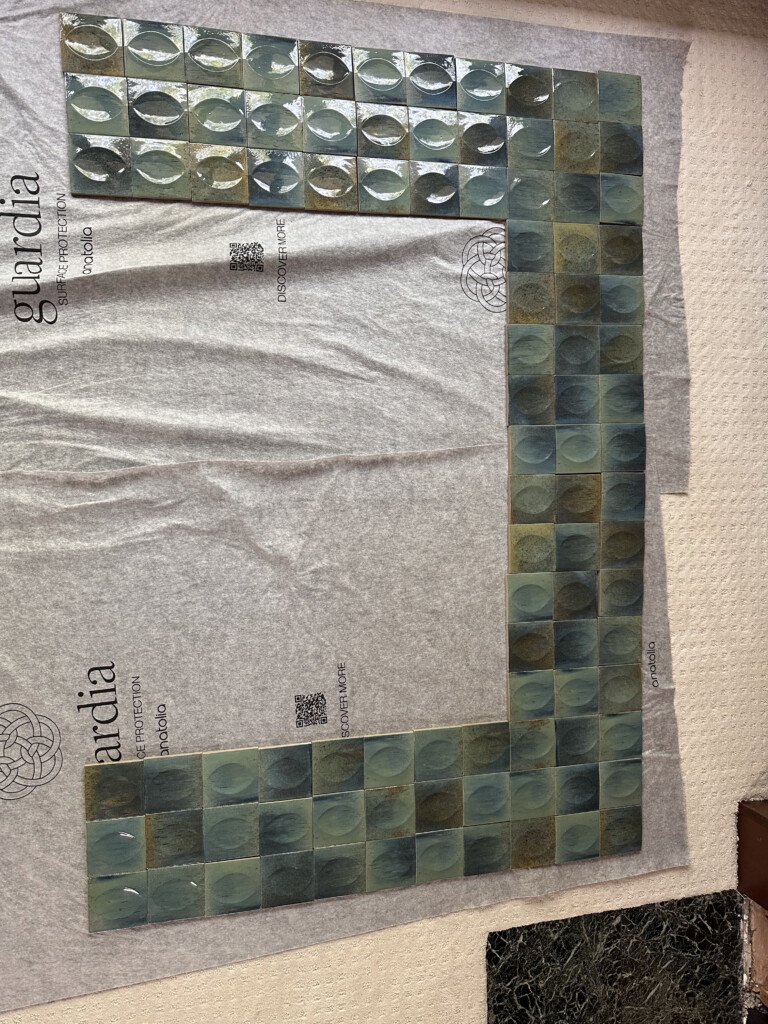
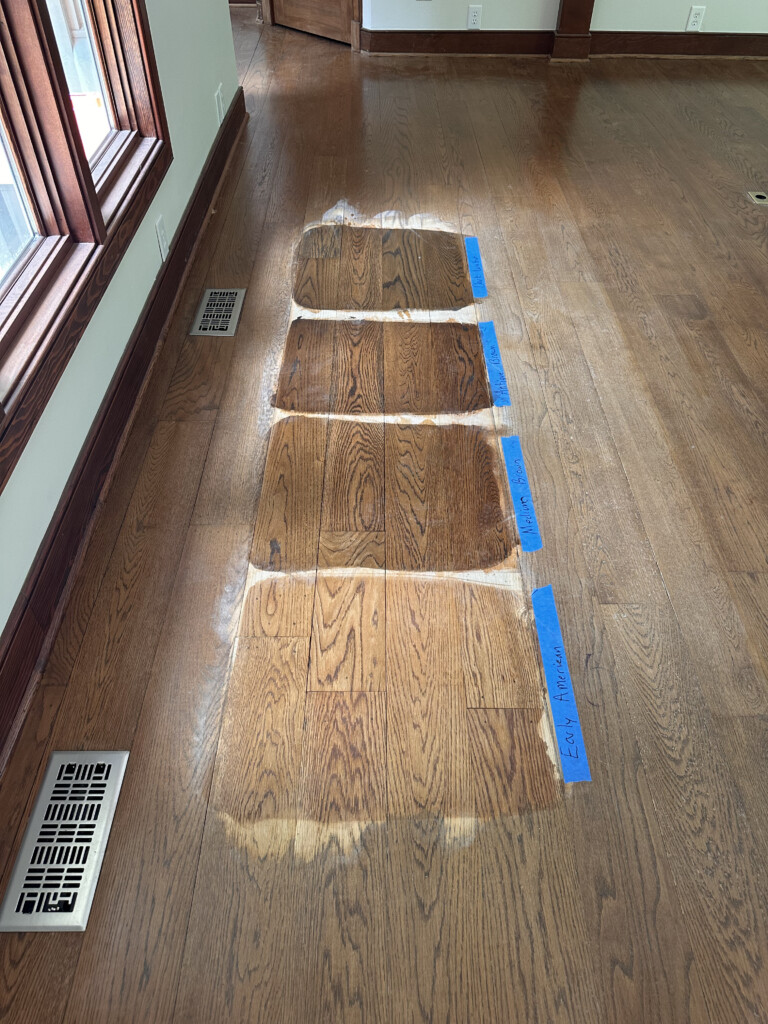
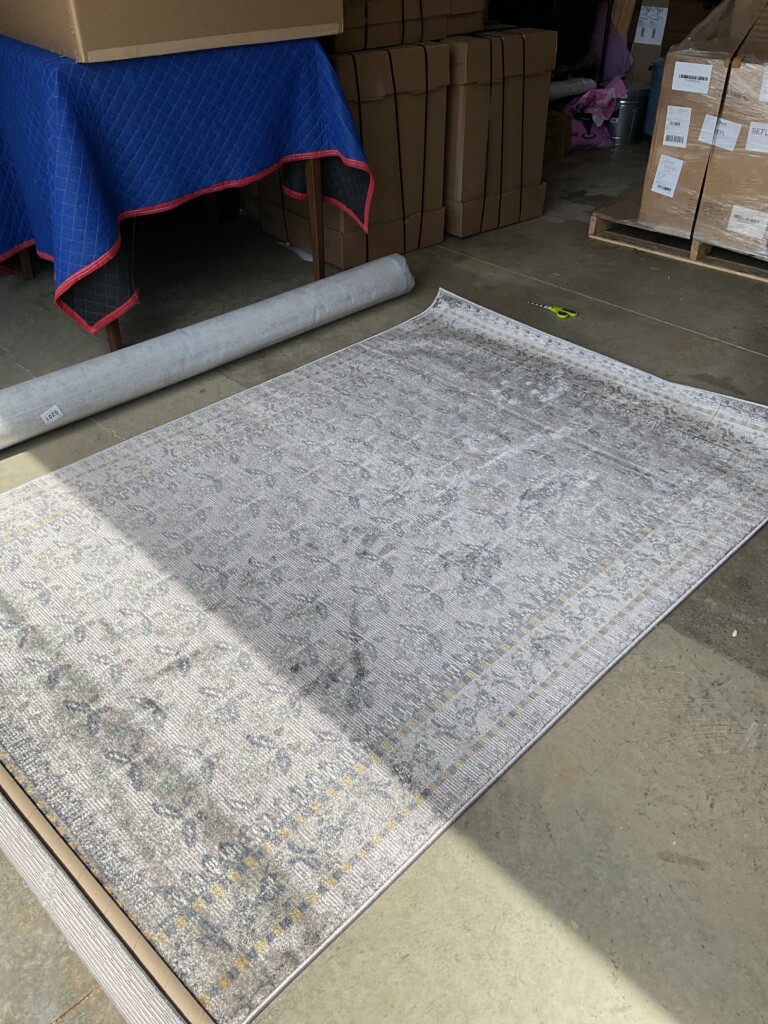
Furniture and materials, including a hemp wood console from our own TEWlines collection, along with tile and fabric selections, were sourced with samples mailed out so final decisions felt confident rather than guessed at. Video check-ins carried the momentum through installation, so nothing got lost in translation between coasts. We handled the ordering and installation of every piece of furniture ourselves, so our clients never had to manage a single delivery from afar.
How do you keep everyone on the same page when there’s a three-hour time difference?
Structure is everything. A standing weekly update, paired with frequent quick calls, keeps a project moving regardless of time zone. So much of our design process already lives digitally that only a handful of meetings actually needed to shift to Zoom. Mood boards and renderings went out by email so there was never a guessing game about what something would look like, and labeled samples and memos arrived by mail so clients had something to hold during our calls. If we needed a same-day answer, we simply flagged the email or picked up the phone.
What happens if a client doesn’t love something once they see it in person?
This is where a virtual process really gets tested, which is exactly why we build in visits at key milestones rather than waiting until the very end. Seeing samples in hand, walking a partially finished space, or comparing a rendering side-by-side with the real room gives clients room to course-correct before anything is final. Distance only works when there’s still space for those honest, in-the-moment reactions, so we make sure that space exists.
What happens if something arrives damaged and the client isn’t there?
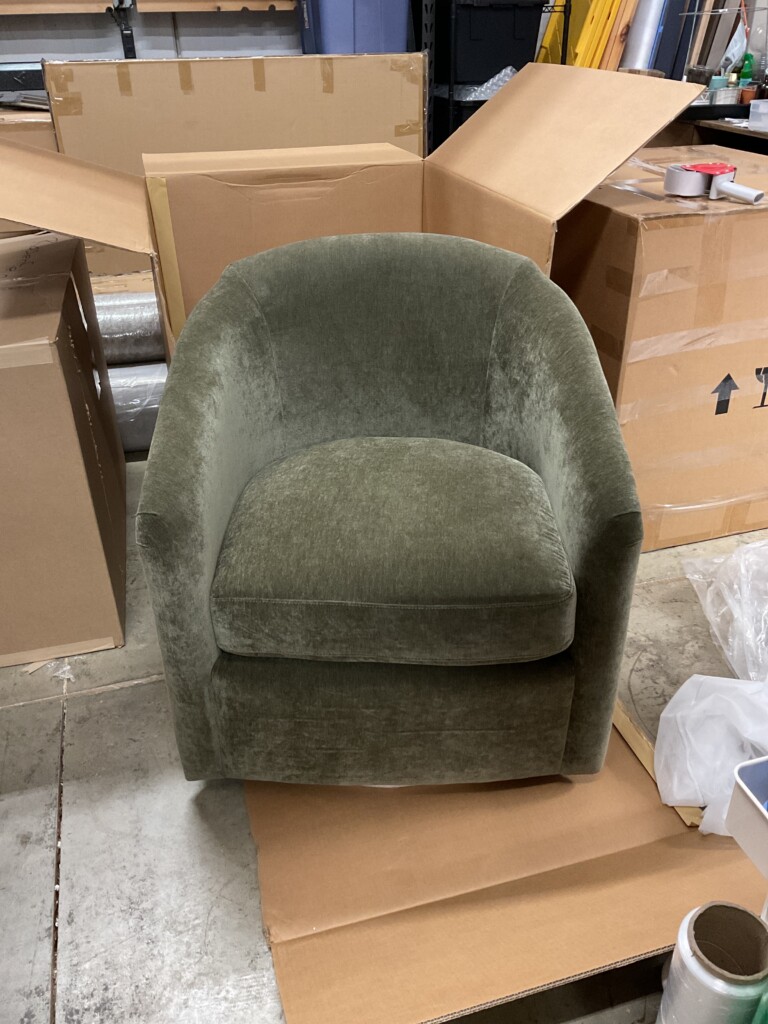
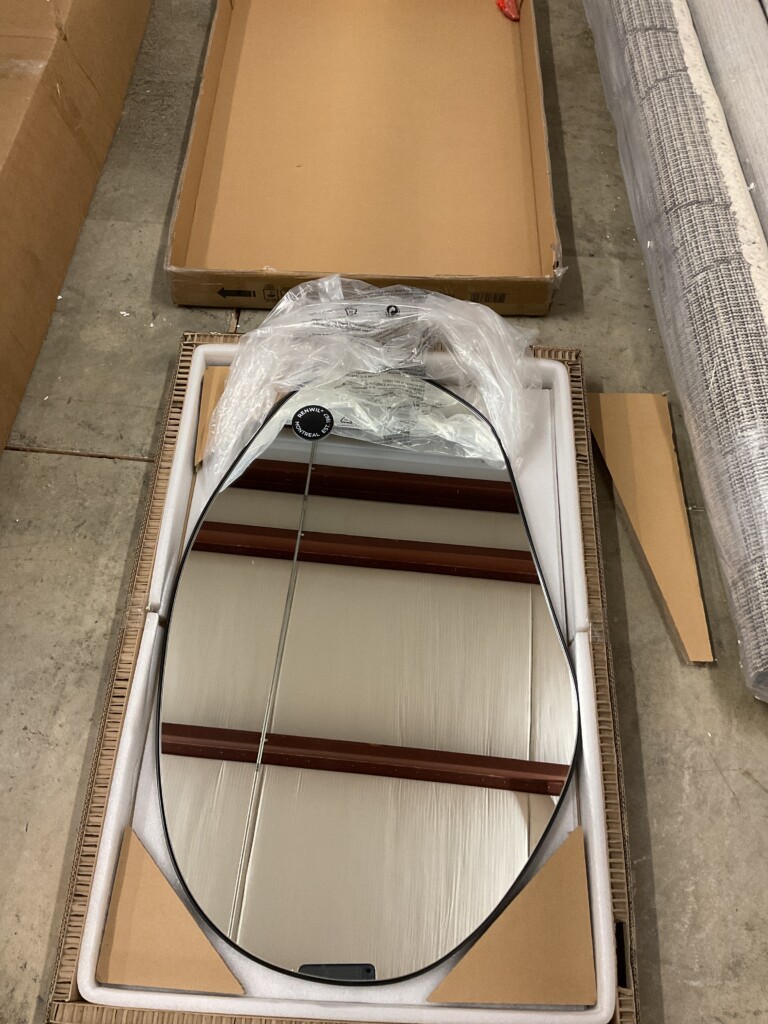
This is exactly why having a local advocate matters. We receive and inspect every delivery in person, so damage or a wrong item gets caught right away instead of weeks later when it’s harder to fix. If something isn’t right, we document it immediately, start the claim or reorder with the vendor, and let the client know what happened and how we’re handling it, usually before they’d have noticed anything on their own. It’s one more thing our relocating clients don’t have to think about, and one more reason a local team on the ground matters even when the client isn’t.
What should someone relocating look for in a designer if they want to do this virtually?
Look for a designer who treats communication as part of the design itself, not an afterthought. Ask how they handle site visits, how often you’ll actually hear from them, and how they help you trust a material or finish you’re choosing sight unseen. The right team makes distance feel like a non-issue, not something you have to work around.
HOW MUCH LEAD TIME DO YOU NEED BEFORE WE MOVE?
The sweet spot is six to twelve months before your move. That gives us enough runway to move through discovery, space planning, and material selections at a pace that doesn’t feel rushed, and it accounts for the reality of lead times on furniture, tile, and custom pieces, some of which can take months to arrive. Our California clients had that kind of timeline, which is part of why the process came together so smoothly.
If you’re relocating in the next three months, we can still help, but plan on bringing your existing furnishings or budgeting for a few temporary essentials to get you through your first weeks in the home. We’ll keep designing in the background so your permanent pieces are ready to layer in as they arrive, rather than trying to furnish an entire house overnight.
do you work with clients relocating to north carolina?
Yes. TEW Design Studio is based in Apex, NC, and serves clients across the Raleigh Triangle area, but our virtual design process means we regularly work with clients who haven’t moved to North Carolina yet. Whether you’re relocating for retirement, family, or a job change, we can start designing your new home well before your moving truck arrives, so the house feels finished and personal from the day you walk in.
Not local? That’s not a dealbreaker.
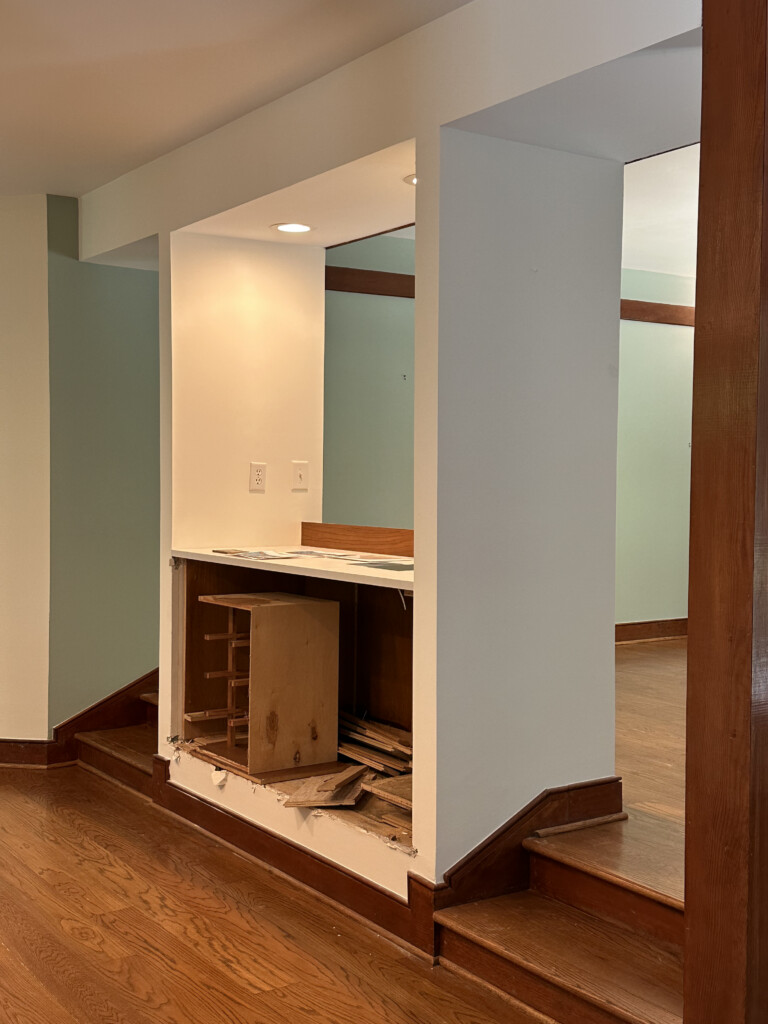
Our Pickard Mountain project came together exactly as we’d hoped: modern, clean, and deeply personal to our clients, even though most of the major decisions were made before they ever walked through the front door.
We’ve built our process to work for clients wherever they are, whether that’s across the state or across the country. If you’re relocating to the Raleigh Triangle area and want your new house to feel like home the moment you unlock the door, reach out. We’d love to talk about what a virtual design process could look like for you.
Have a Space You’ve Been Pondering?
We’d love to hear about it. It all starts with a 15-minute Discovery Call so we can understand your design needs. Reach out to start the conversation.
Want to Read More?
Check out our latest blogs to see what’s new at TEW!
-
“The goal isn’t a room that looks good in photos but stresses everyone out to maintain. It’s one where the design works quietly and the people living there can exhale.” That line is from a piece I wrote for Kitchen & Bath Business this month, and you can read the full feature here. It’s about […]
-
This project just earned a Residential Specialty Award in the Regional 2026 Chrysalis Design Awards, and we wanted to share the full story behind it. The Chrysalis Awards recognize the best in residential remodeling across the country, honoring teams for design, craftsmanship, and problem-solving. This is our fifth Chrysalis Award in four years, and this […]
-
Most homes get designed for an idealized version of how people live. Real life is messier than that, and it changes over time. At TEW Design Studio, we design for how people actually live now, and how they want to live ten or twenty years from now, including families navigating ADHD, autism, sensory processing differences, […]