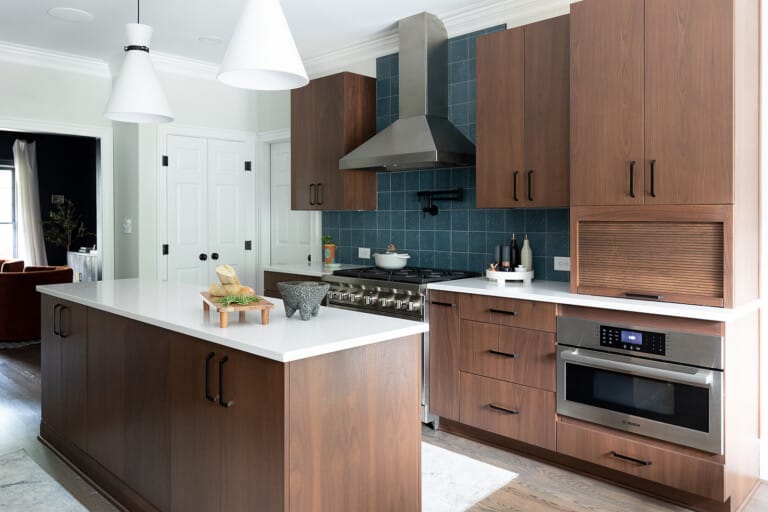
How Do You Brighten a Room With No Natural Light?
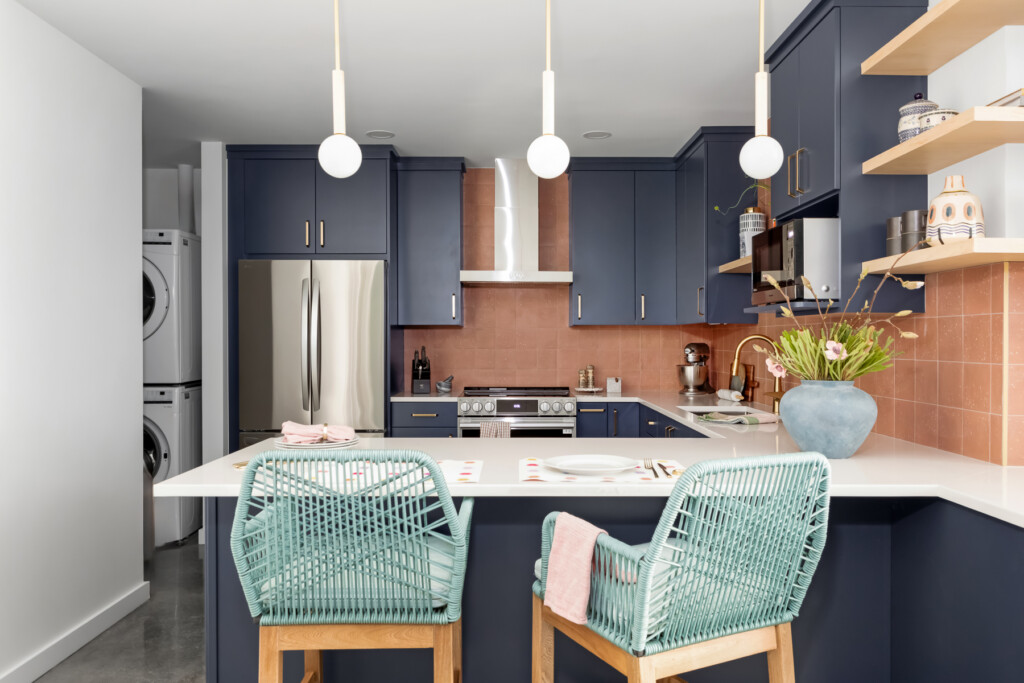
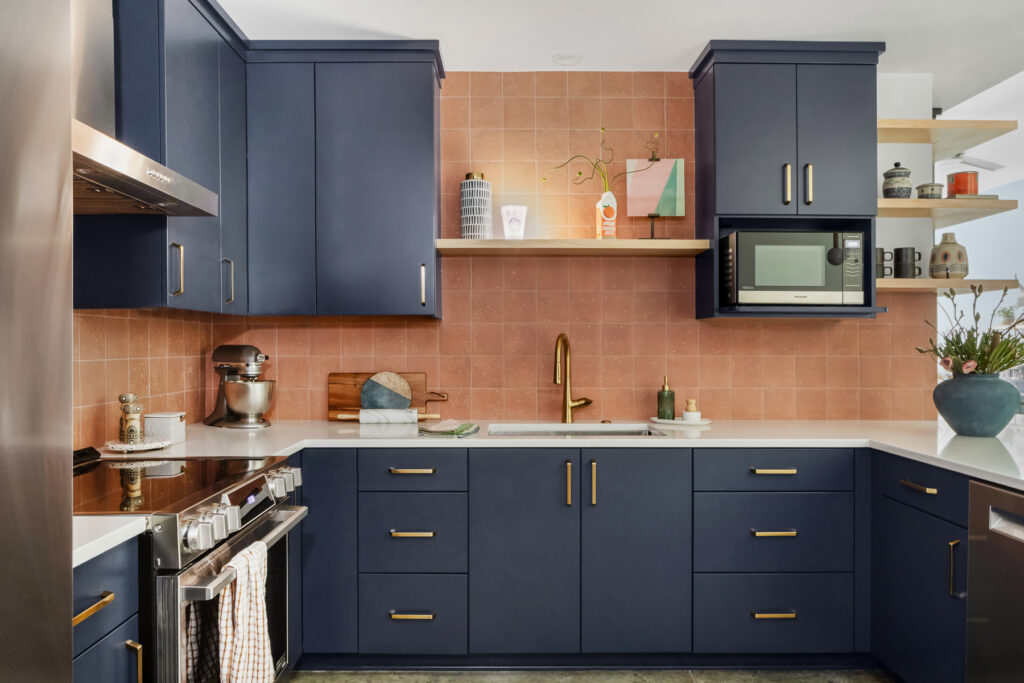
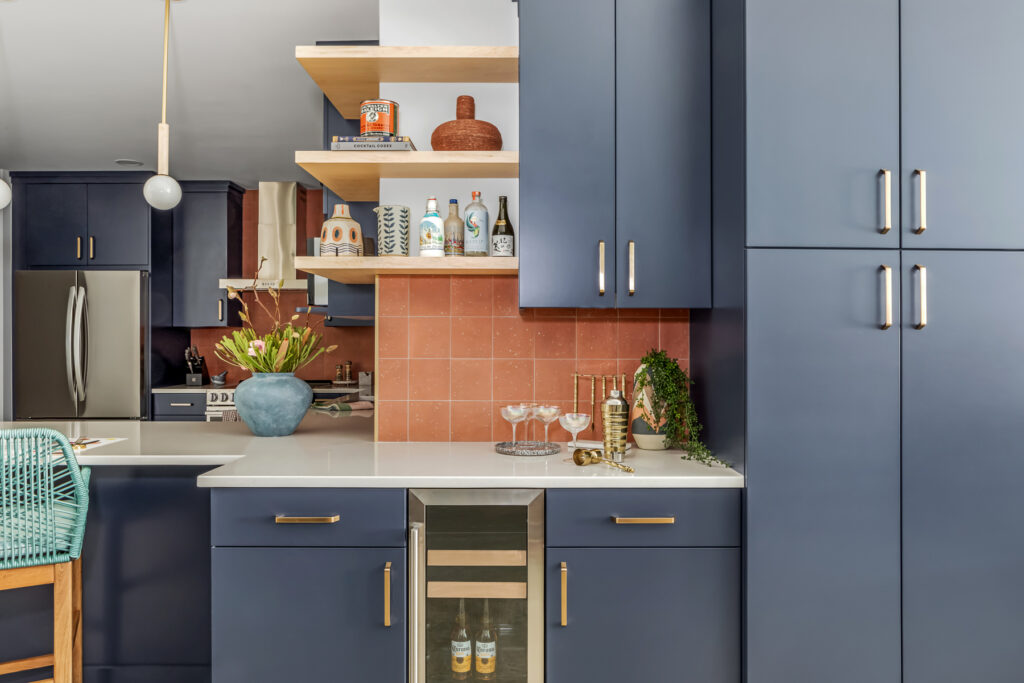
The instinct is almost always the same: keep everything white, keep it light, keep it neutral. The thinking goes that a space without natural light cannot handle color, cannot handle depth, cannot handle anything that might make it feel smaller or darker. We disagree. When we took on a downtown Raleigh condo with the brief to give it her personality back, we did not reach for white. We reached for navy cabinetry, rust ceramic tile, warm brass hardware, and a guest bath that doubles as a local love letter. The space is brighter, warmer, and more alive than it ever was as a white box. Here is how we did it.
the Challenge: A Downtown Condo Stuck in a White Box
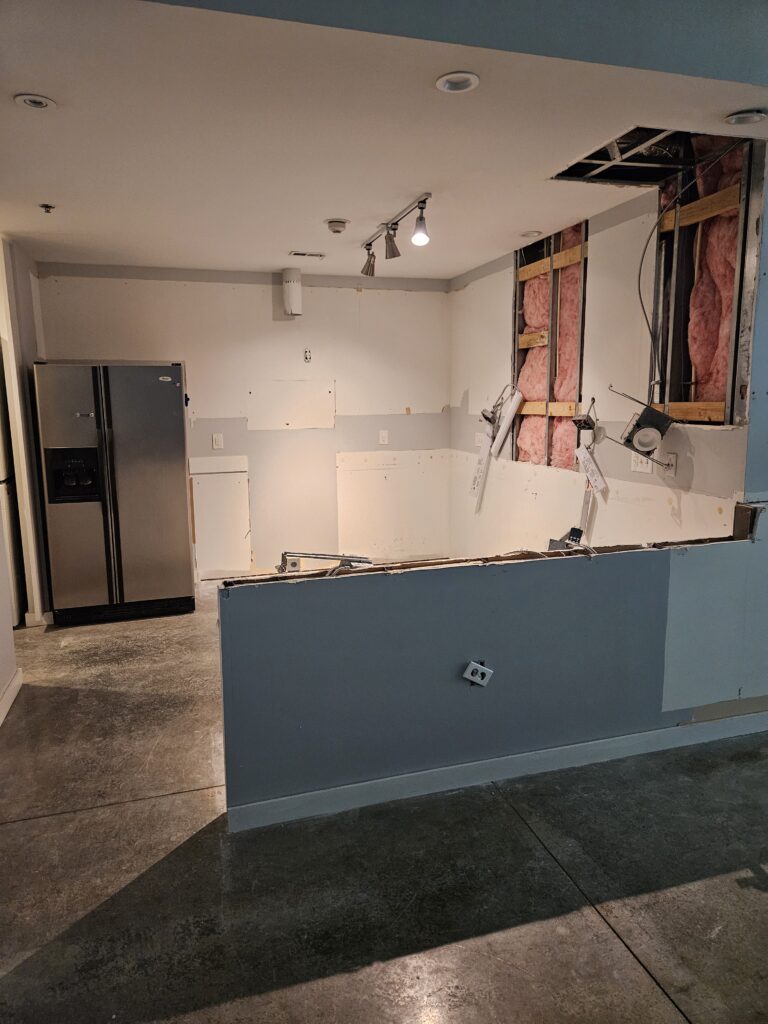
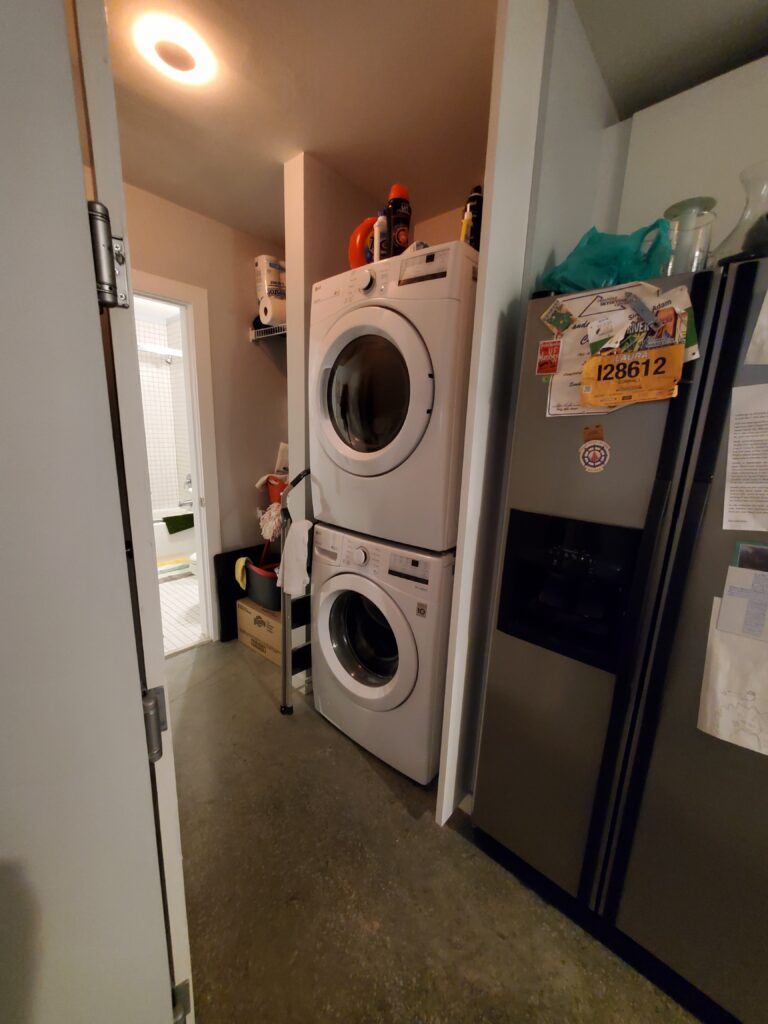
The Fayetteville Street condo sits in the heart of downtown Raleigh. Like many city condos, it came with the built-in realities of high-density living: shared walls, fixed floor plates, and building restrictions that made adding or enlarging windows out of the question. Several areas of the home, including the kitchen, laundry nook, and primary bath, had limited to no direct natural light.
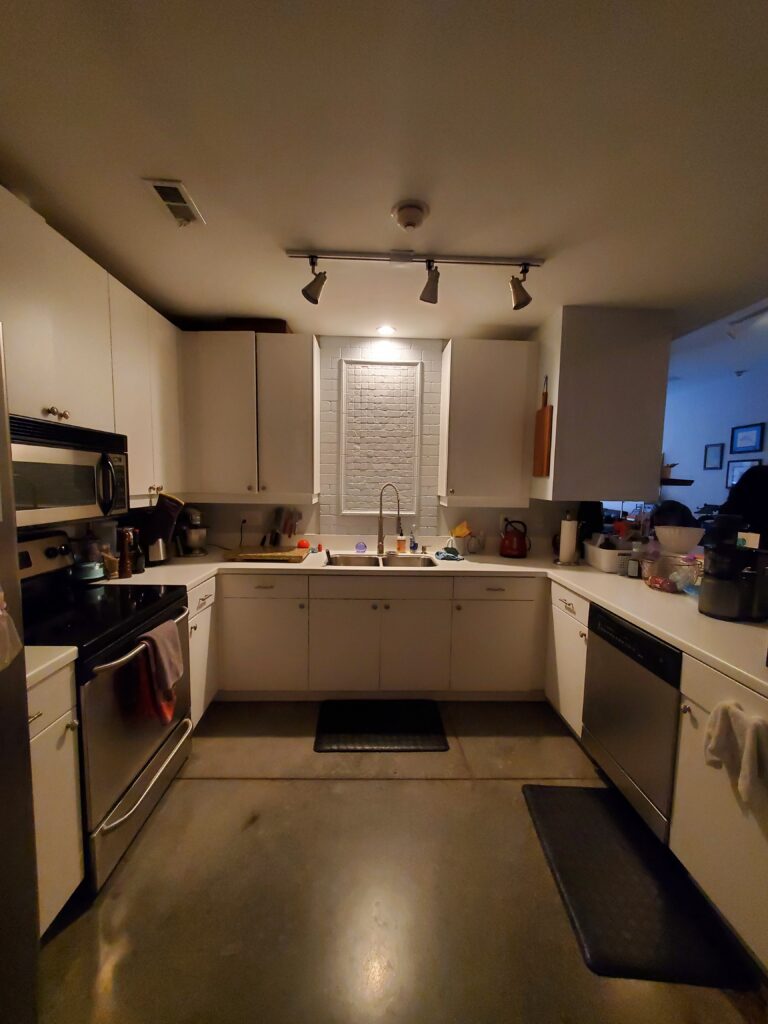
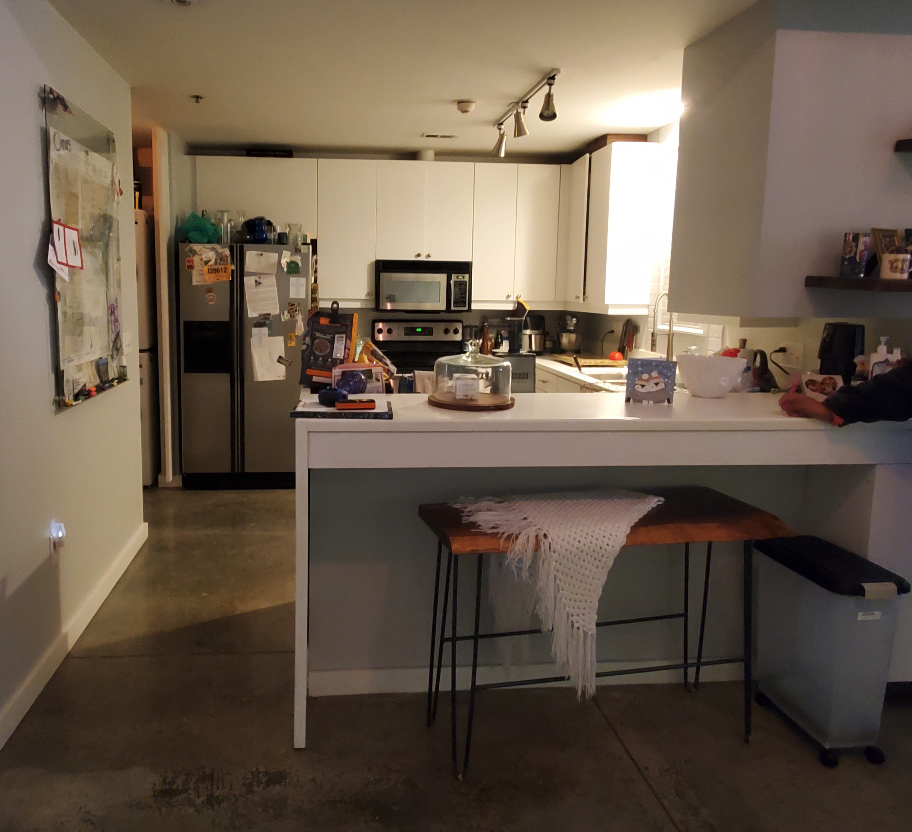
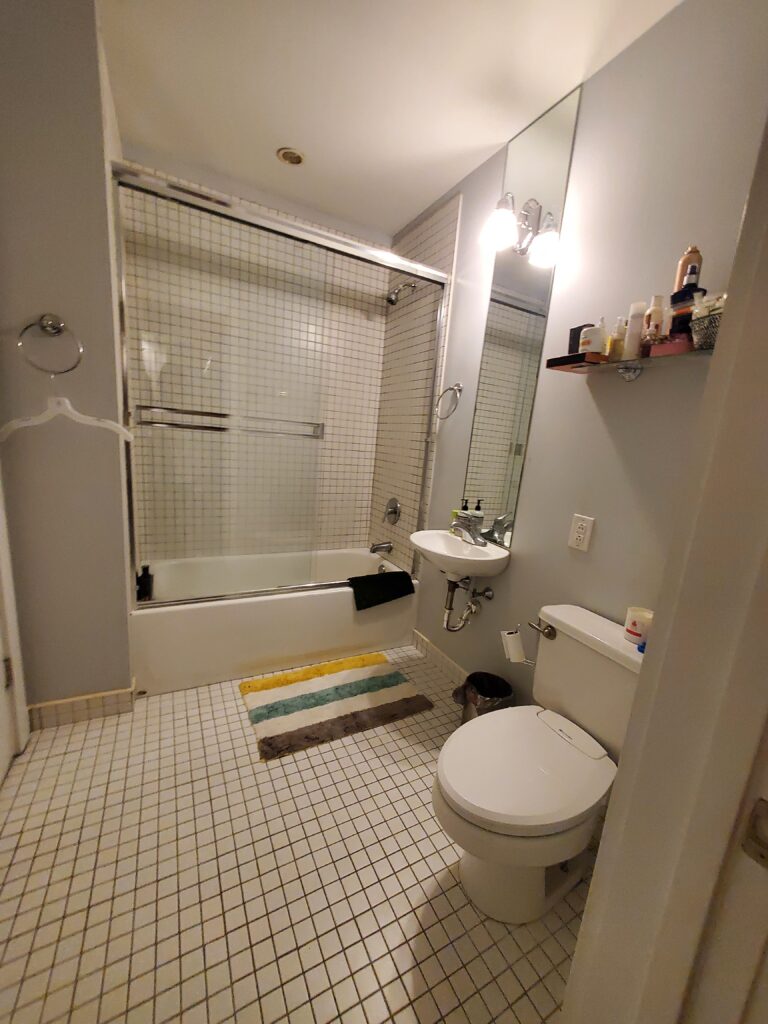
The original condition was stark white cabinets, outdated appliances, and flat lighting with no distinct point of view. It felt cold. Not cozy-cool or minimalist-intentional, just cold. Our goal was to contrast the bustling city view below with a warm retreat inside, all while navigating the restrictions of a tighter-than-normal city condo.
Layer One: Ambient Light That Sets the Tone
The first principle in a windowless or low-light space is that overhead lighting alone will never be enough. A single ceiling fixture creates flat, shadowless light that reads as institutional rather than designed. We replaced the original overhead fixture and addressed light temperature throughout. Warm-toned bulbs in the 2700K to 3000K range were non-negotiable. Cool white light in a space without natural daylight to balance it reads as harsh and clinical. Warm light reads as intentional.
Updating the light fixtures in the adjacent entry and dining room as well meant the home flowed better and felt less disjointed. Light temperature is not just a room-by-room decision. It is a whole-home one.
Layer Two: Under-Cabinet Lighting as a Game Changer
One of the highest-impact moves in the kitchen was the addition of under-cabinet lighting. In a space with no windows above the counter, the work surface itself becomes the brightest plane in the room. Under-cabinet lighting solves two problems at once: it provides practical task lighting, and it creates a secondary light source that lifts the middle of the room visually.
At night, the under-cabinet lighting gives the space a moody, elevated look. The countertops glow, the backsplash tile catches the light, and the kitchen reads as warm and curated rather than dim. In a space without natural light, this moves from nice-to-have to essential.
Layer Three: Reflective Surfaces That Multiply the Light You Have
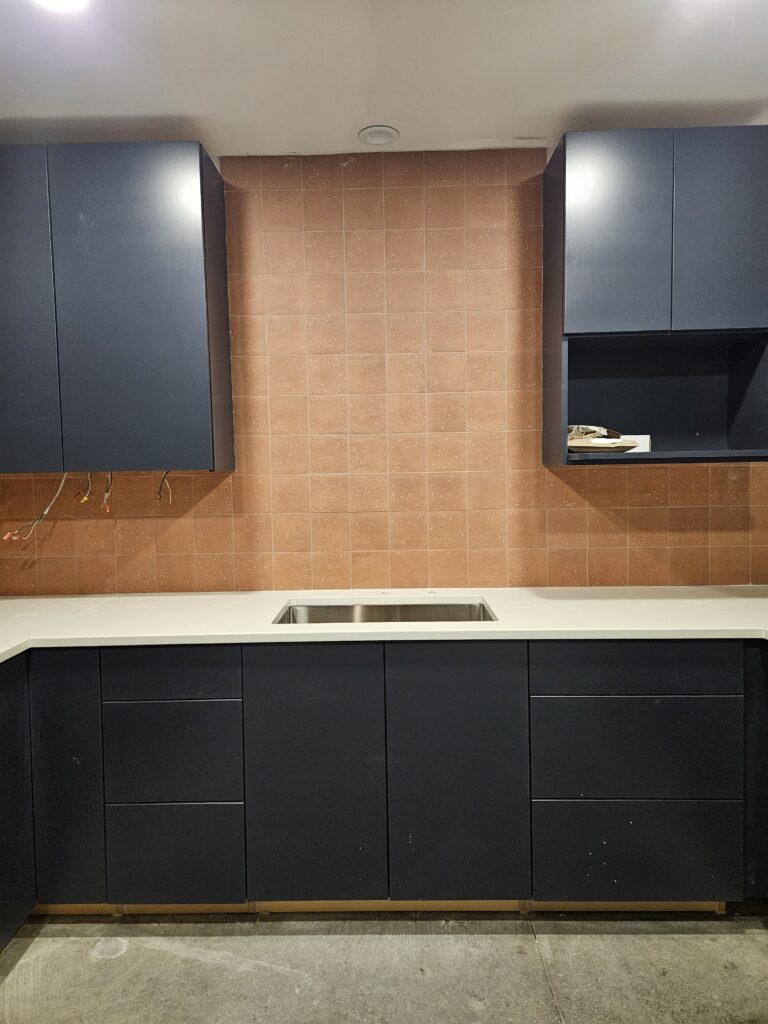
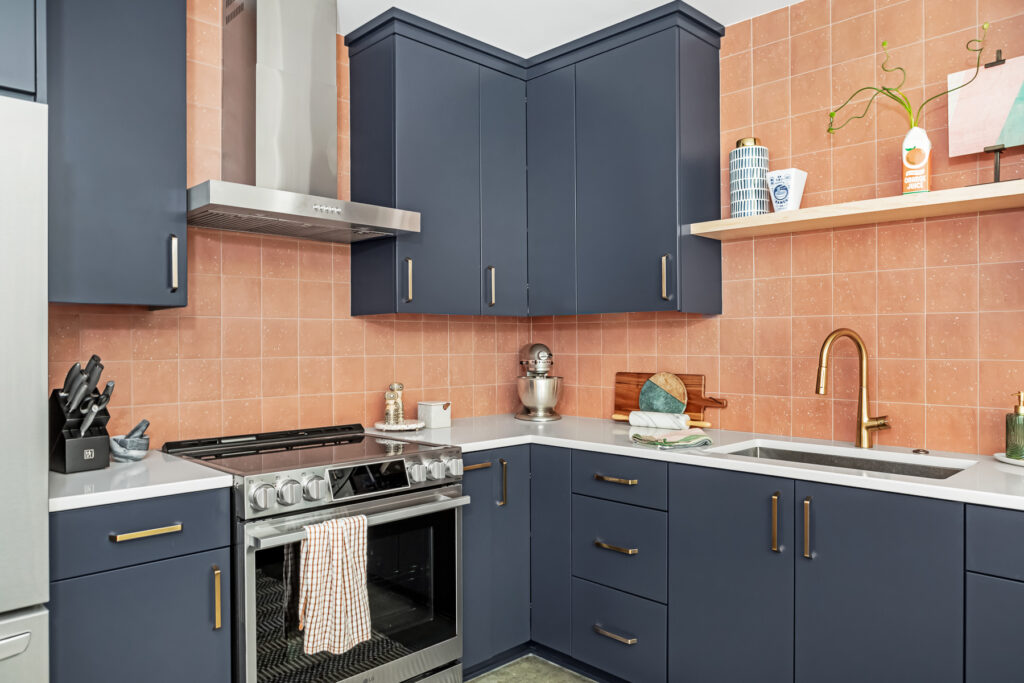
When you cannot bring in more light, the next best move is to make the light you have work harder. We chose finishes throughout that reflect and amplify rather than absorb. The rust ceramic backsplash tile has a glazed finish that catches and bounces light. The warm brass hardware adds small points of reflection at eye level. The glass shower enclosure in the primary bath keeps the space visually open rather than cutting it into smaller, darker zones.
We kept the walls white throughout the main living areas, not as a default, but as a deliberate structural decision. White walls in a light-limited space are doing real work. They are the canvas that makes everything else land correctly.
Why We Chose Deep Color in a Space With No Natural Light
Here is where most designers and most homeowners get it wrong. The assumption is that a space with no natural light must stay light and neutral to feel livable. White walls, white cabinets, light countertops. The logic seems sound until you actually live in it. White without natural light does not read as bright and airy. It reads as gray and flat.
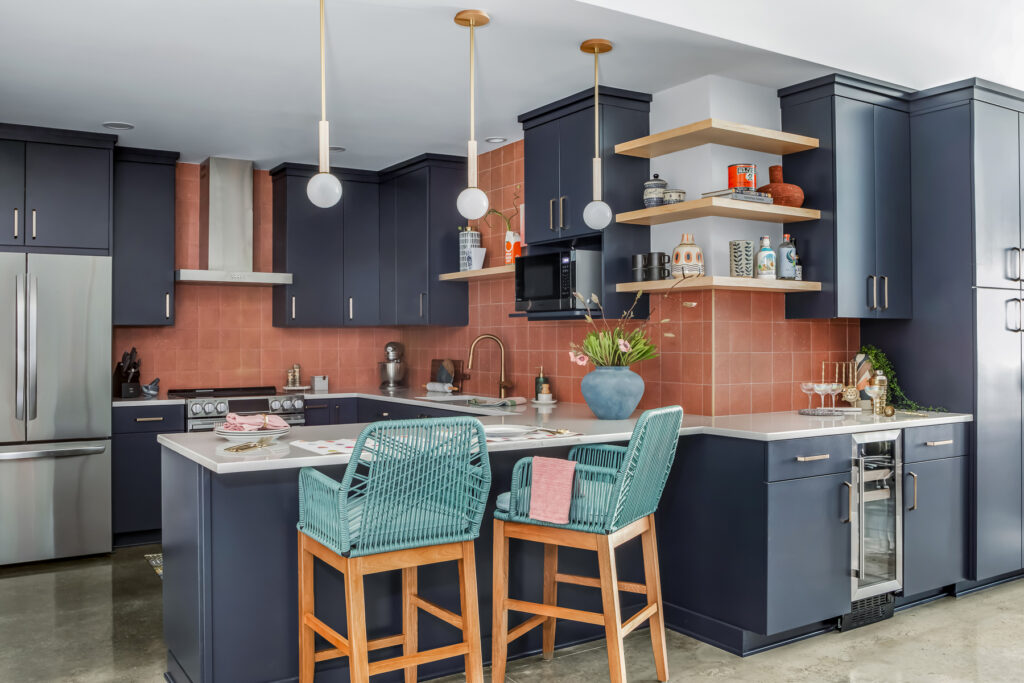
We introduced a palette of what we called warm meets cool: rust ceramic tiles paired with deep navy cabinetry and warm brass hardware. The darker cabinetry adds a sense of depth and heaviness that actually anchors the room rather than making it feel smaller. The color gives the eye somewhere to land. It creates contrast that white alone simply cannot produce in a low-light environment. The result is a kitchen that feels curated and colorful rather than cold and flat, which was exactly the point.
The key is pairing deep color with the right light sources and the right reflective surfaces. Navy next to flat cool lighting would sink the room. Navy next to warm brass, glazed tile, and warm under-cabinet lighting feels elevated and intentional. Color in a dark space is not the enemy. The wrong lighting paired with any color is the enemy.
The Laundry Nook: One Intentional Space Instead of an Afterthought
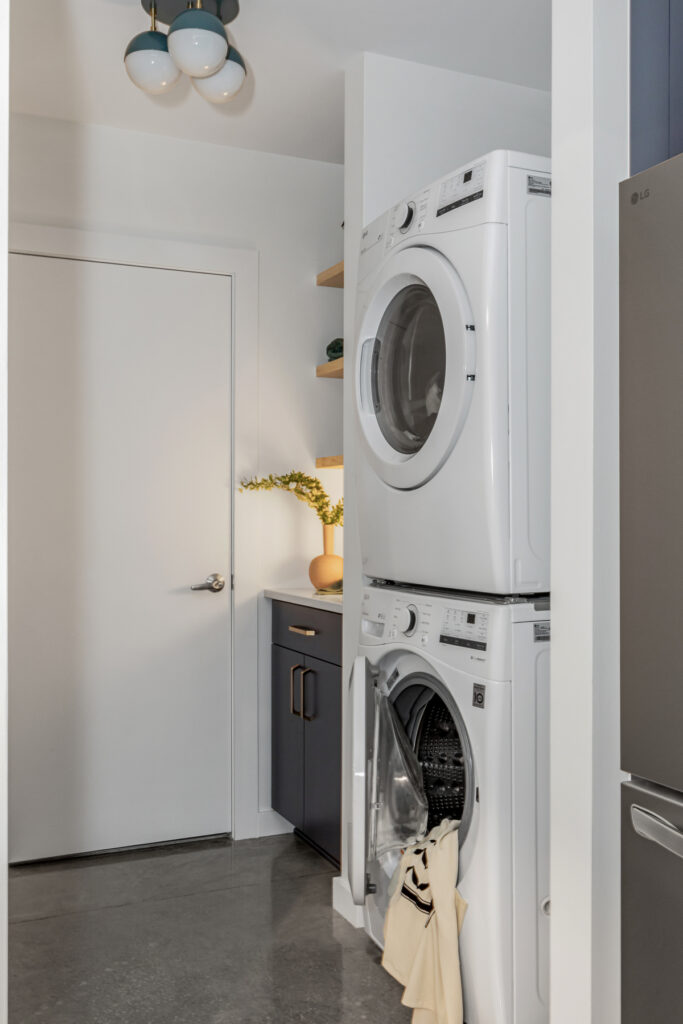
The laundry space was an interesting challenge because of its placement. Hidden in plain sight, the area dedicated to laundry was a corner nook with a stacked washer and dryer. No dedicated room, no natural light, and a real risk of it reading as exactly what it was: a forgotten corner.
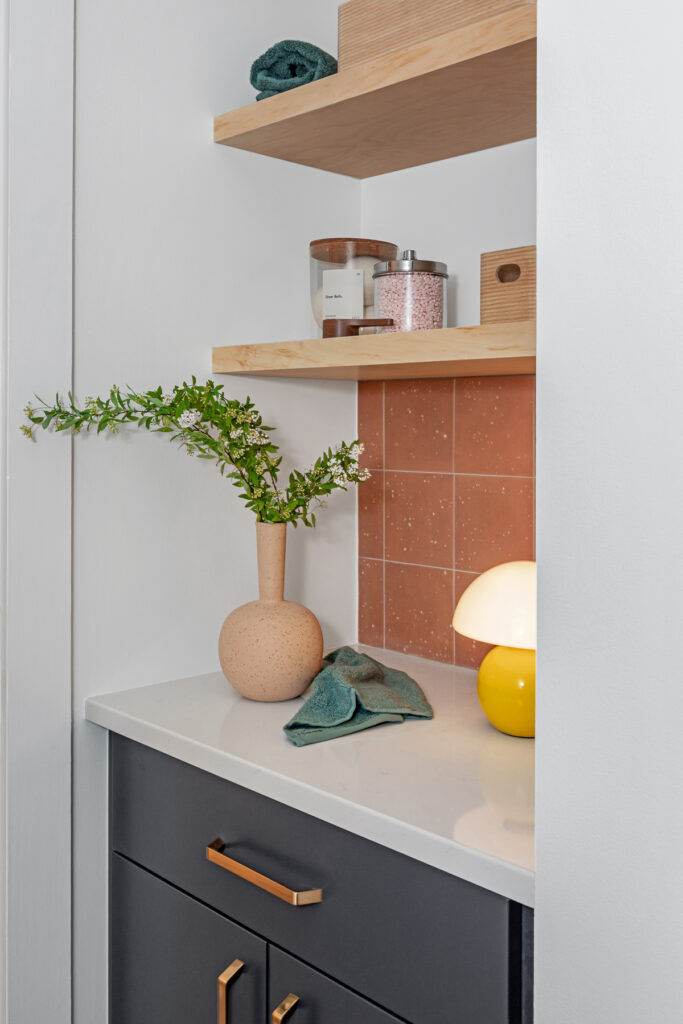
We carried the rust tile and navy cabinets over from the kitchen since they were essentially one room. Through cohesive finishes, it all looks like one intentional space instead of an afterthought. The eye moves across the whole area rather than stopping at the transition. Cohesion is a lighting strategy, not just an aesthetic one.
How We Gave the Primary Bath a Soul
Functionality was the priority in the primary bath, but it did not have to come at the expense of style. The LED backlit mirror and glass shower enclosure modernized the space without overcomplicating it.
The lit mirror has been a game-changer for our client’s morning routine. It now acts as a high-end vanity for easy makeup application, provides even shadow-free light for the face, and creates a soft halo of light that lifts the surrounding wall. In a bathroom without windows, the vanity mirror moment is where you either win or lose the room. This one wins it.
A Local Love Letter: The Guest Bath
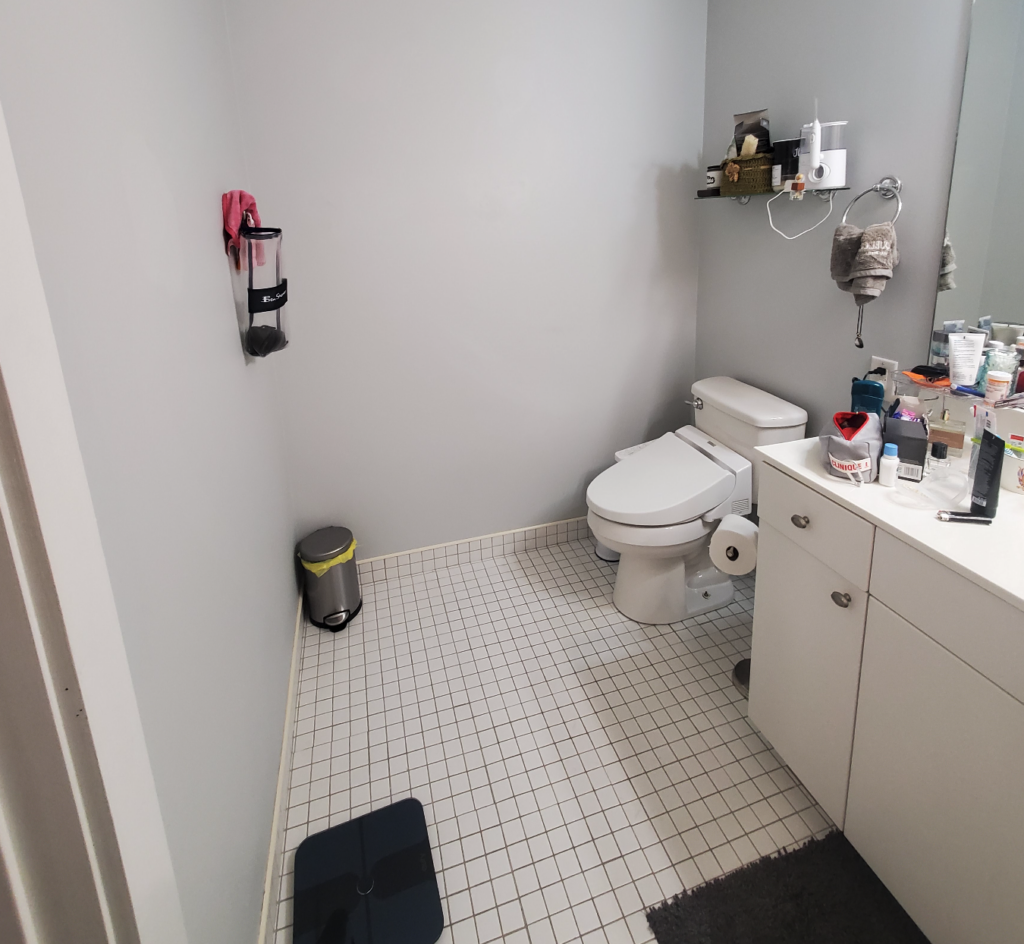
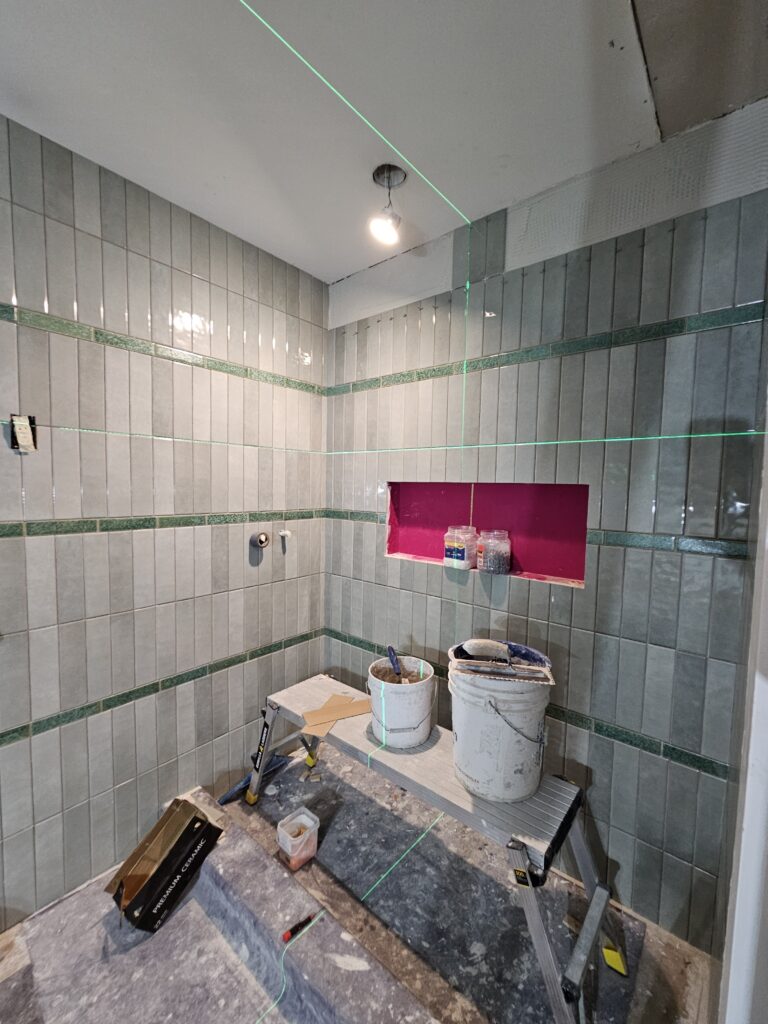
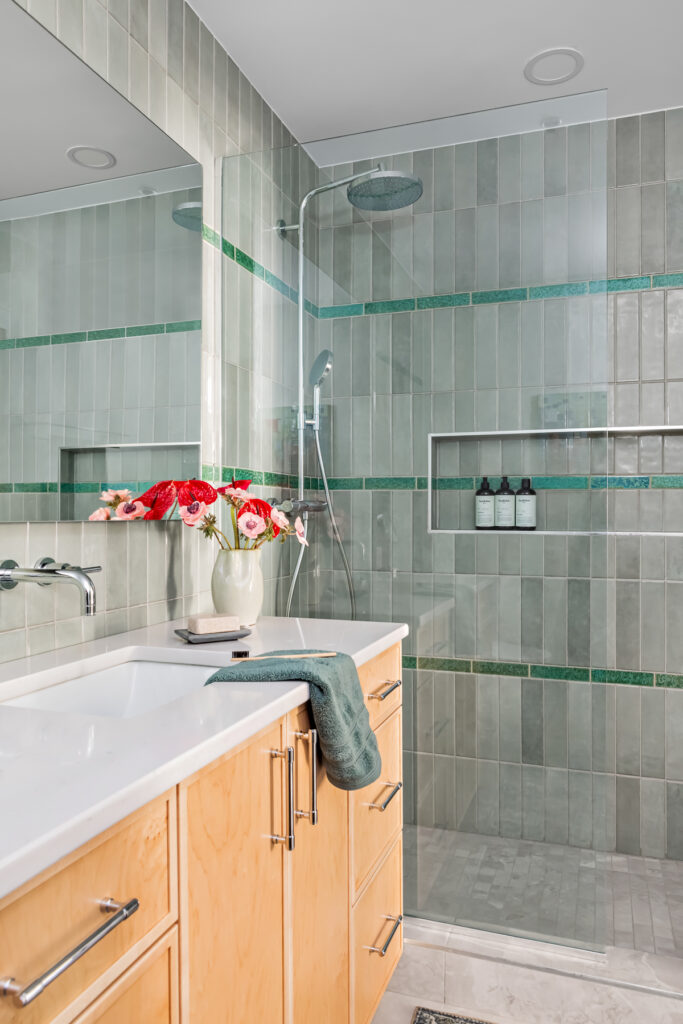
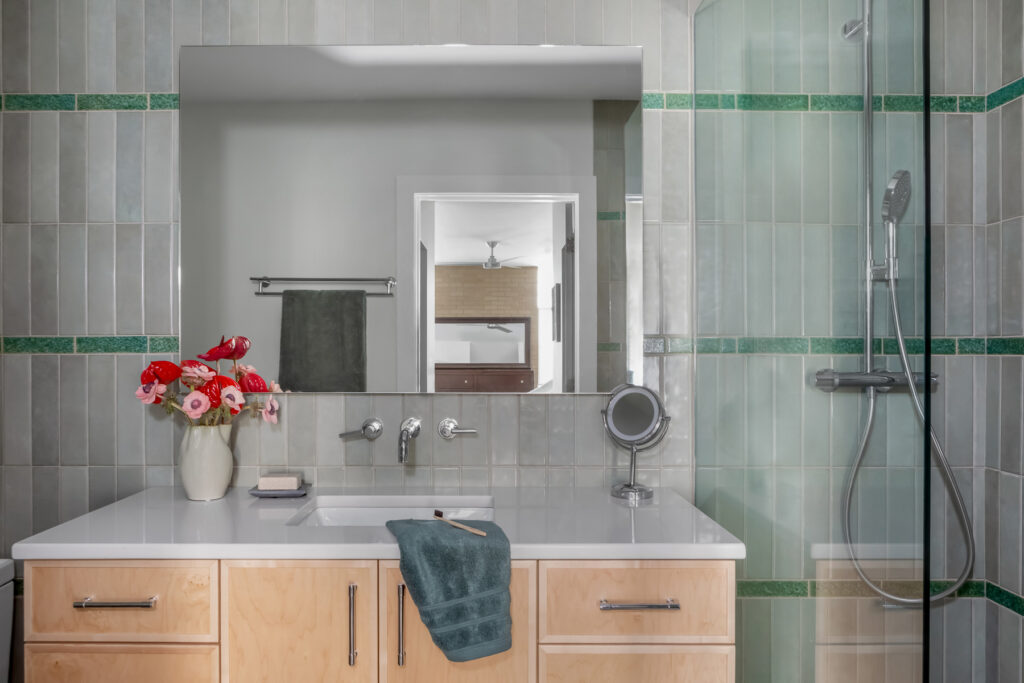
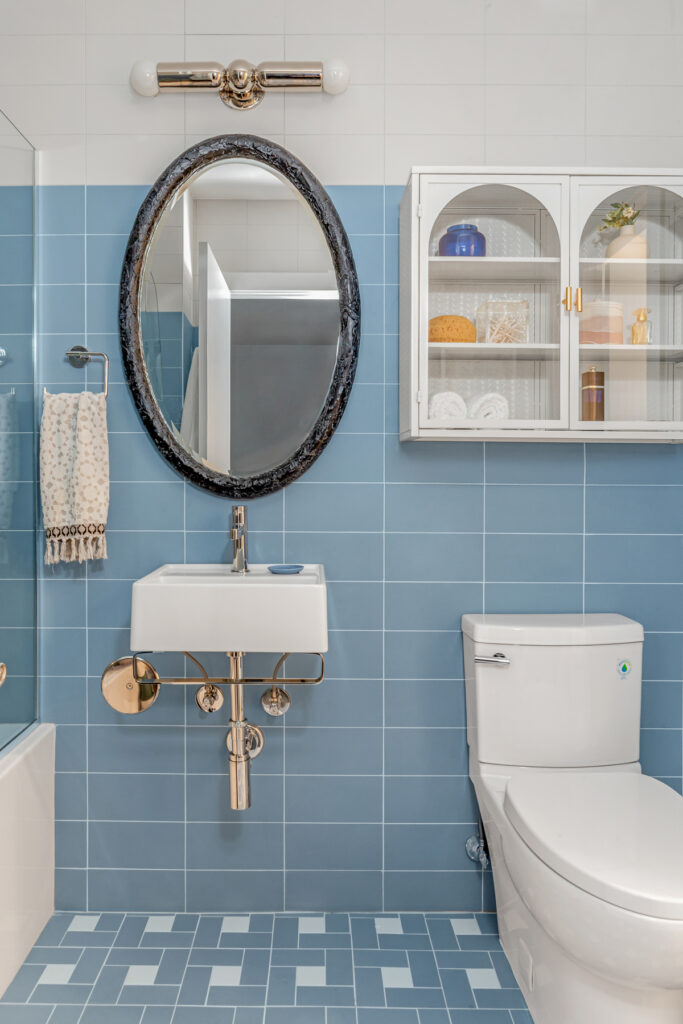
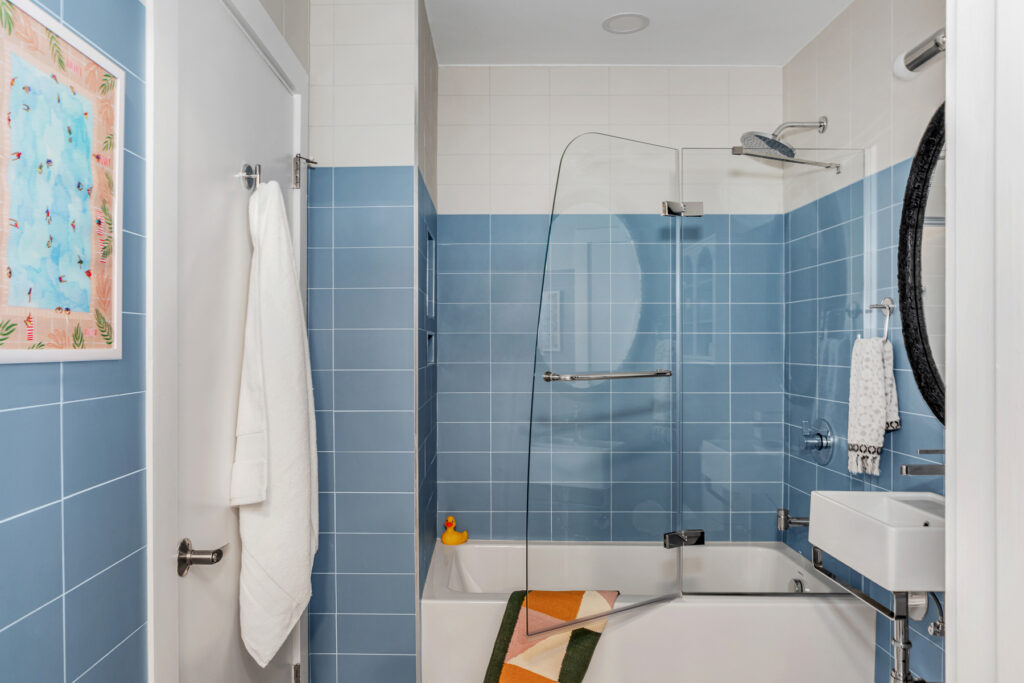
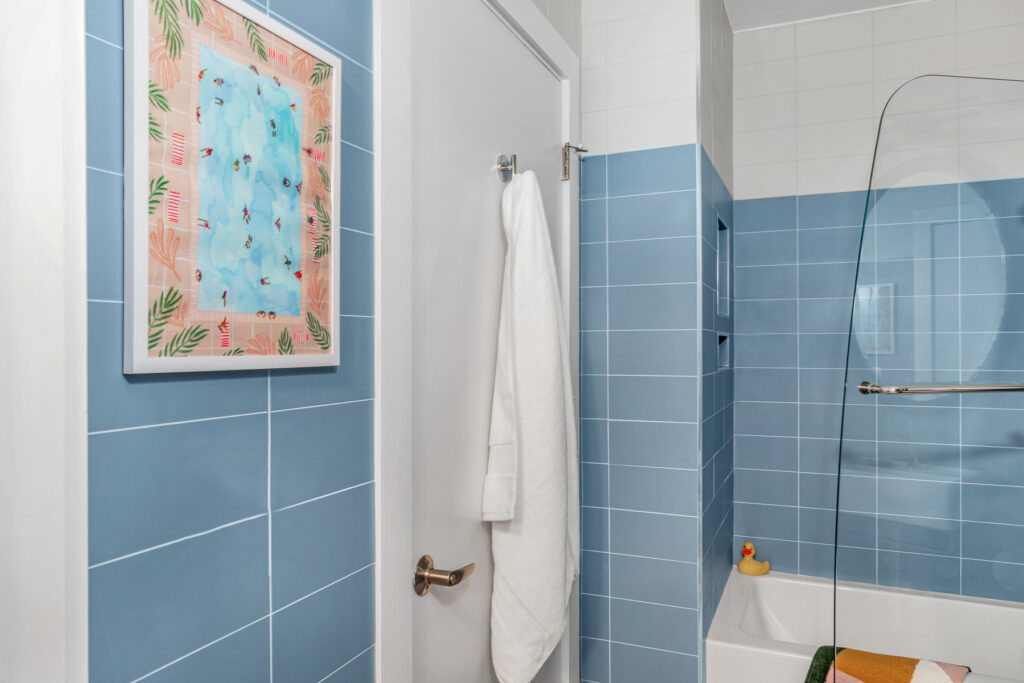
Our client loved the downtown Raleigh pillar, James Beard-winning chef Ashley Christensen’s Poole’side Pies, which sadly closed in 2023 and where the bathrooms were famously swimming pool themed. Since the home’s biggest selling point is its downtown location, we wanted to give it a sense of place and a fun story.
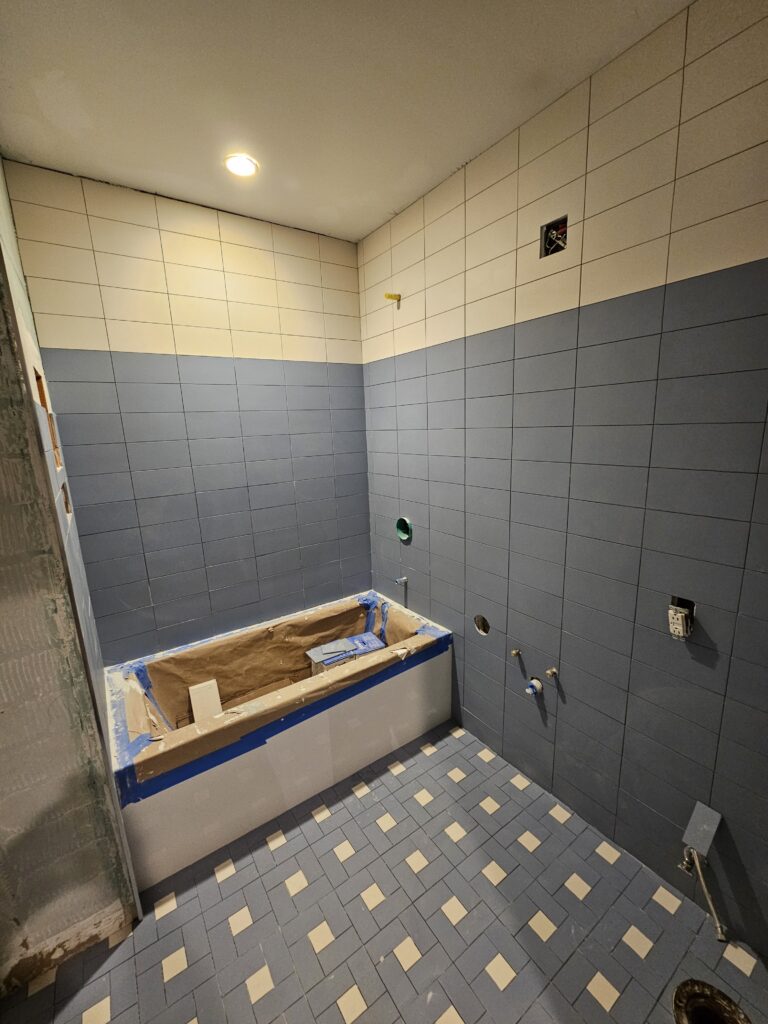
We recreated a similar swimming pool aesthetic through cool blue tile and sparkling chrome finishes. We stuck with a pedestal sink for that retro feel and to save space, and switched out a single shelf for a wall cabinet to create more storage opportunity in limited space. This is an important principle in low-light design: there is a difference between a dark space that feels neglected and a dark space that feels like a decision. The Fayetteville Street guest bath feels like a decision. When you commit fully to a direction in a space like this, the result reads better than trying to fight the conditions. Sometimes the most beautiful thing you can do with a dark space is let it be dark on purpose.
what this means for your home
If you are working with a space that has no windows or very limited natural light, the path forward is not to default to white and hope for the best. Build a layered lighting plan. Choose finishes that reflect rather than absorb. And consider whether a carefully chosen deep color, properly lit, might give your space more life and more personality than any amount of white ever could.
The homes we design at TEW Design Studio in Raleigh are built around how people actually live in them. Light, and the strategic management of its absence, is one of the most powerful tools we have. If you are navigating a renovation with challenging light conditions, we would love to talk through what is possible.
Looking for an Interior Designer in Raleigh or Durham?
TEW Design Studio is a full-service interior design firm serving Raleigh, Durham, and surrounding North Carolina communities, specializing in residential, commercial, and hospitality interiors.
Our work blends durability, beauty, and livability because great design should last.
Ready to Elevate Your Space?
Let’s talk about how we can transform your space to better meet your needs. It all starts with a 15-minute Discovery Call so we can understand your design needs.
Want to Read More?
Check out our latest blogs to see what’s new at TEW!
-
What is biophilic design? Biophilic design is a concept in the design industry based on the evolutionary theory of biophilia, which studies human’s innate need to connect with the natural world. Biophilic interior design is a design approach that aims to improve health, well-being, and even productivity. We do this by bringing nature or natural […]
-
When our clients decided to relocate from California to North Carolina, they found their forever home before they’d ever set foot in the state. It was a beautiful mid-century modern style home in the Raleigh Triangle area with great bones, ready for some light updates and a lot of personalization. The catch was that they […]
-
“The goal isn’t a room that looks good in photos but stresses everyone out to maintain. It’s one where the design works quietly and the people living there can exhale.” That line is from a piece I wrote for Kitchen & Bath Business this month, and you can read the full feature here. It’s about […]